With the Iran war dragging into its sixth month with no exit in sight, the leaders of Saudi Arabia, Pakistan and Turkey gathered in Mecca on 7 August to sign a trilateral defence agreement. Built on the earlier Saudi–Pakistan defence pact, the Mecca defence alliance marked a shift in the power dynamics of West Asia, as Zahid Hussain reports from Islamabad.
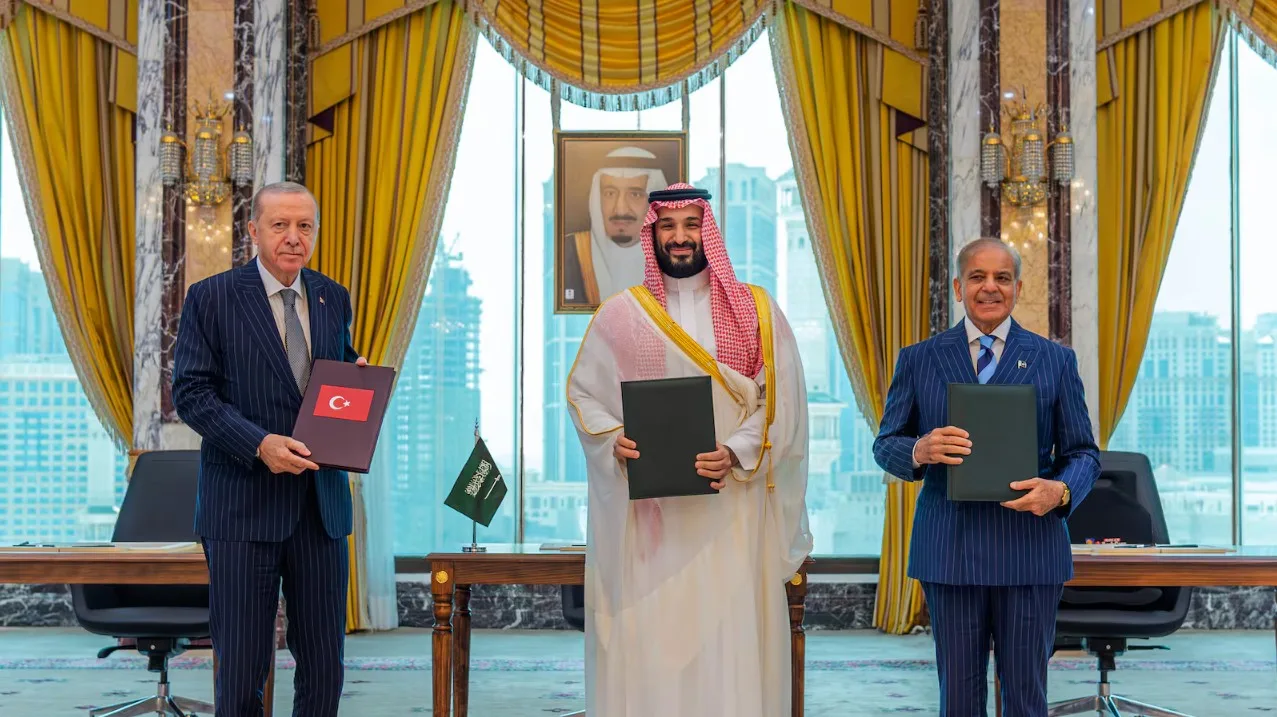
Turkish President Recep Tayyip Erdogan, Saudi Crown Prince Mohammed bin Salman and Pakistani Prime Minister Shehbaz Sharif after signing the trilateral defence agreement in Mecca, marking a new chapter in regional security cooperation. Photo: Reuters
The three countries span the Middle East, South Asia and Eurasia. Though their security challenges differ, they are now bound together by a common defence pact. Saudi Arabia and Pakistan were already tied by a bilateral agreement; Turkey's entry broadened the pact's scope, and the collective strength of the three made the grouping a formidable force in the region. The alliance declared that ‘any armed attack against any one of the three states shall be regarded as an attack against them all,’ while insisting that it was not directed against any country and served instead as a deterrent against external aggression.
At a follow-up meeting in Istanbul, the participants took their first concrete step by establishing a permanent secretariat to be based in Riyadh. A strategic political committee was formed to operationalise the declaration that an attack on one member is treated as an attack on all three. The meeting adopted a working agenda covering four areas – military interoperability, joint exercises, defence-industrial cooperation (joint production and research), and counterterrorism coordination – and set out a roadmap for admitting new members.
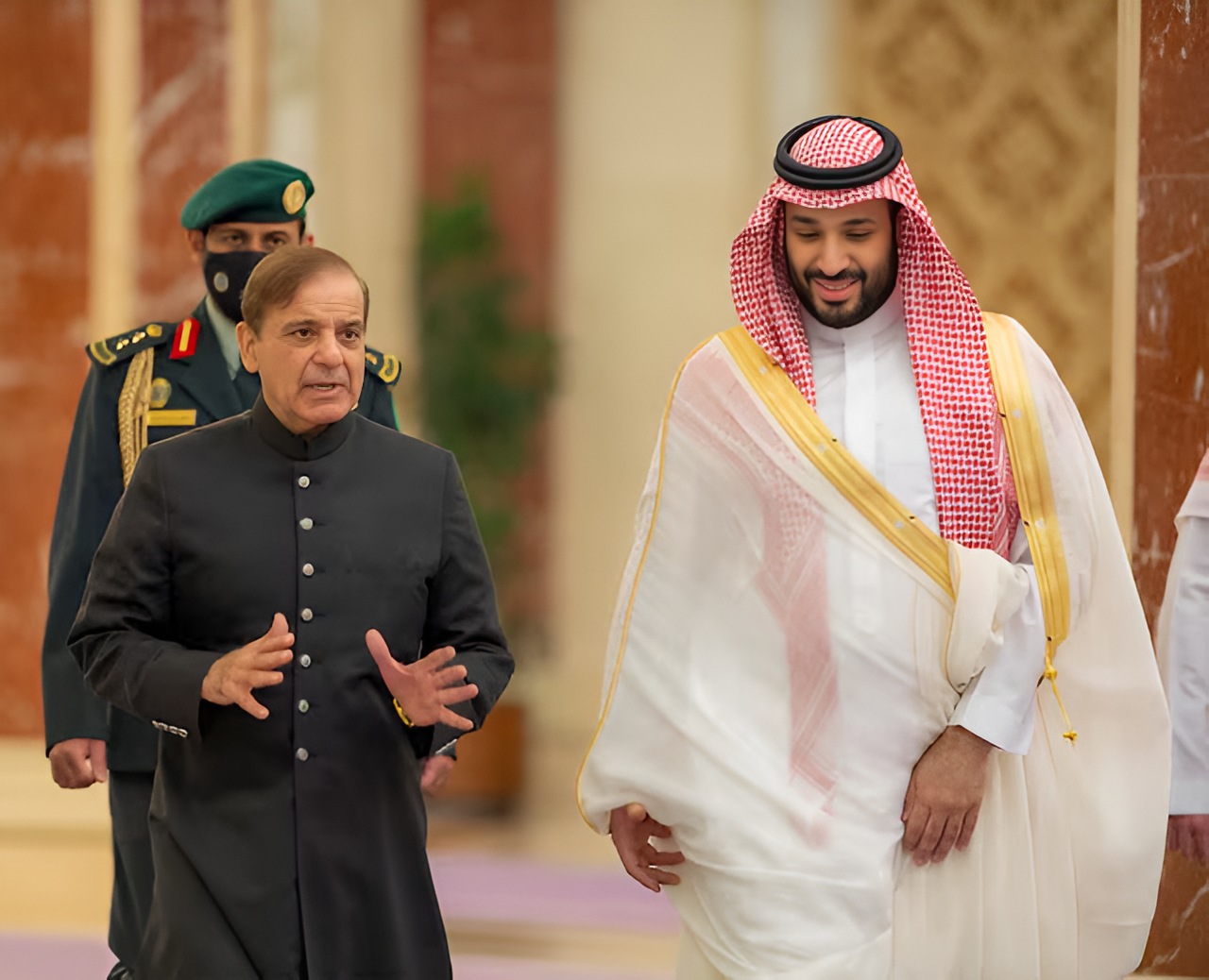
Saudi Crown Prince Mohammed bin Salman welcomes Pakistani Prime Minister Shehbaz Sharif in Jeddah in April 2022, reflecting the longstanding ties between the two countries that underpin their later defence partnership. Photo: Saudi Royal Court/Handout via Reuters
It would be wrong to brand the bloc an Islamic alliance, or more narrowly a Sunni one. It represents regional security architecture that reduces dependence on the US and pushes back against Israel's expansionist agenda. The treaty signifies security cooperation among middle powers seeking stronger partnerships without abandoning strategic autonomy in an emerging multilateralism. The bloc combines
Saudi money, the Turkish military-industrial base and a nuclear-armed Pakistan's vast military experience – a pool of differing strengths that requires neither identical interests nor complete strategic alignment.
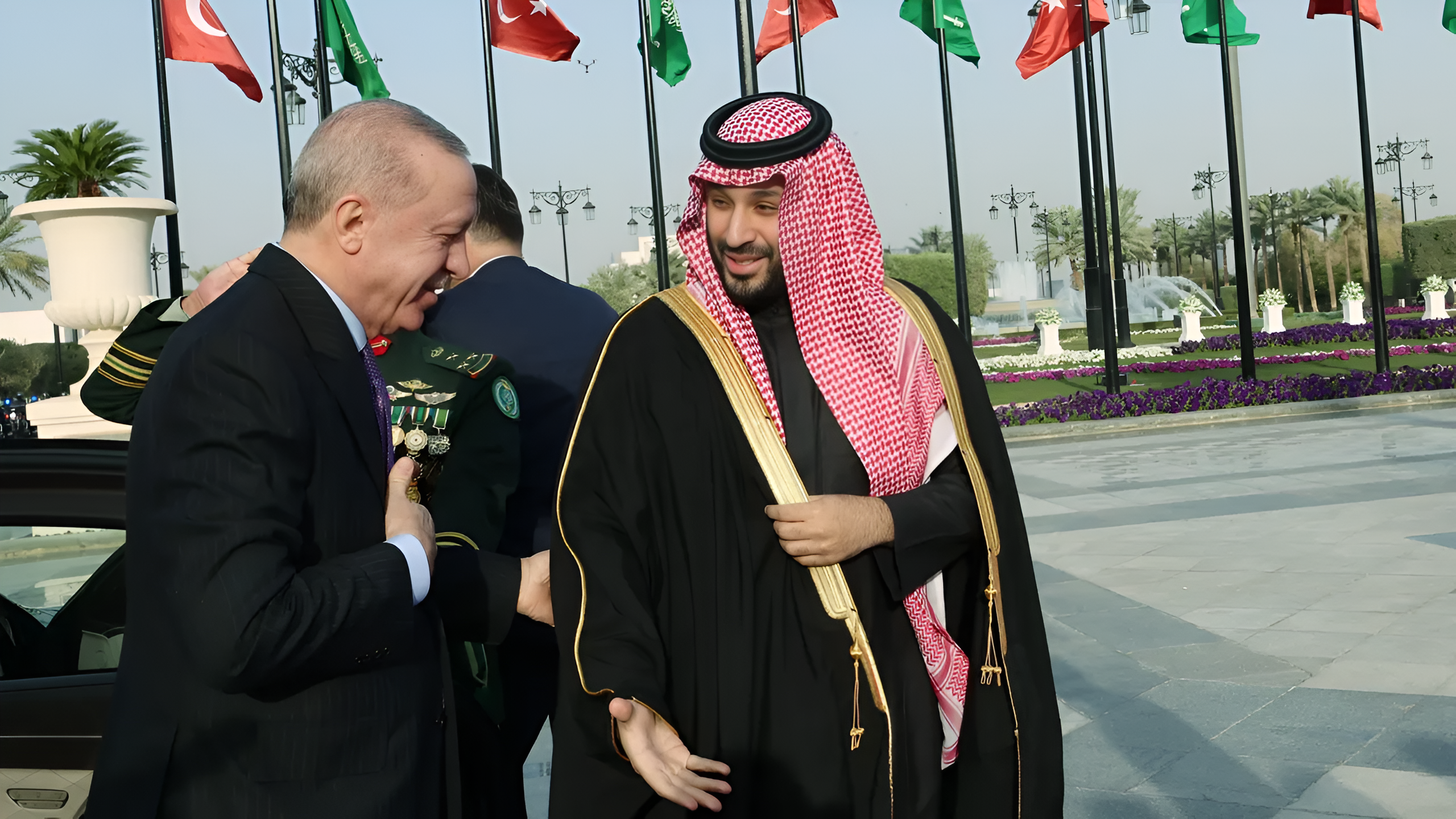
Turkish President Recep Tayyip Erdogan is welcomed by Saudi Crown Prince Mohammed bin Salman during an official ceremony, reflecting the growing Saudi–Turkey relationship that forms part of the new trilateral security framework. Photo: AA
The pact took shape as questions were being raised about the reliability of the US as a defence guarantor for its Middle Eastern partners. Far from ensuring security, the presence of US military bases has made these countries – many of which also have security pacts with Washington – more vulnerable. Lessening that dependence, however, does not mean severing ties with America.
The alliance remained silent, though, on the question of where the common threat lies – a question all the more pertinent given that the agreement took shape while America's war on Iran dragged on and Israel continued an expansionist war that threatens regional security. Saudi Arabia has been directly affected by the Iran war; Pakistan and Turkey have remained on the fringes. The Mecca Agreement has been likened to NATO's Article 5, but any military response would still require political decision-making, and the immediate practical emphasis falls on intelligence-sharing and deterrence.
The new defence architecture cannot be described as anti-American. All three countries maintain good relations with Washington. Turkey is a NATO member; Saudi Arabia is designated a major non-NATO ally, and this week the US State Department formally approved the accompanying F-35 sale. The White House has affirmed that the US remains Riyadh's ‘primary strategic partner’. Not surprisingly, President Trump welcomed the formation of a bloc that does not clash with America's interests in the region – though Washington has issued no formal official response to the alliance.
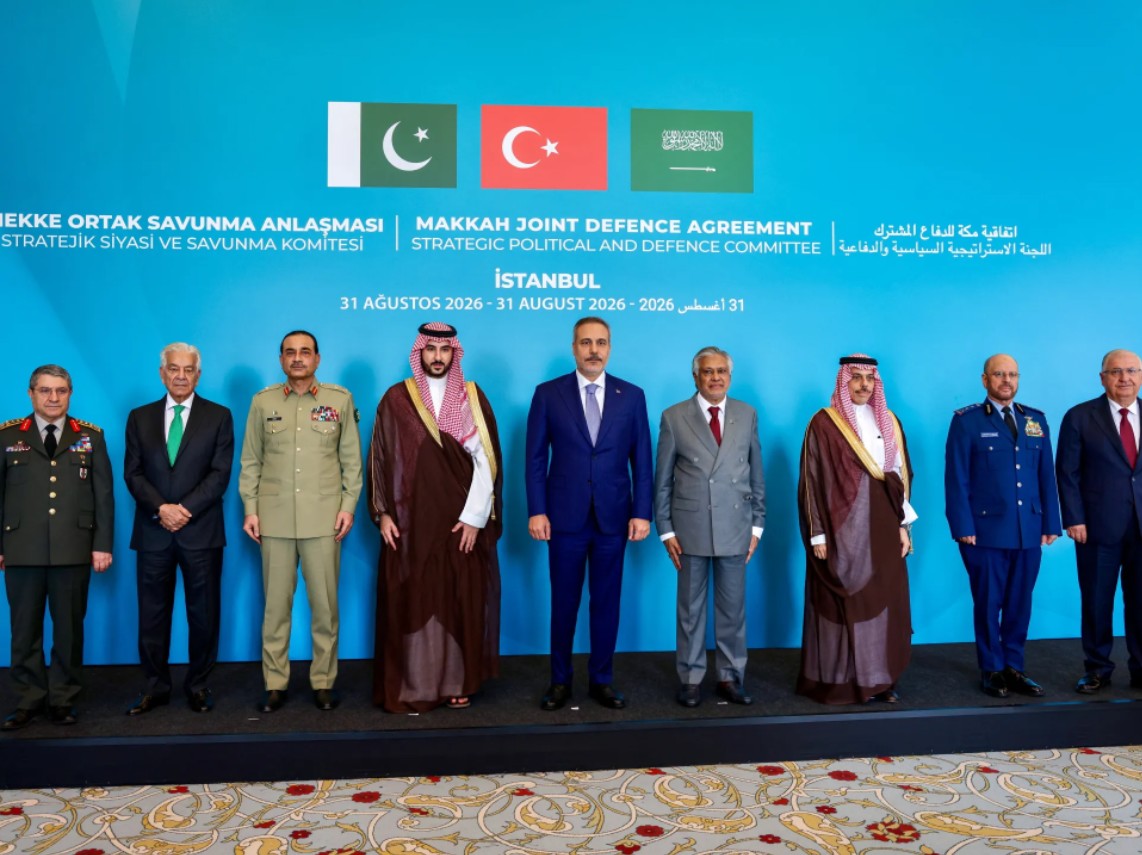
Officials from Turkey, Pakistan and Saudi Arabia meet in Istanbul as Pakistan deepens defence and strategic ties with key regional partners. Photo: Murad Sezer/Reuters
Yet unanswered questions remain about how the partnership will actually work, given the varied security concerns of its members. While agreeing to a joint defence pact, each country also brought its own conflicts and security problems: Pakistan's principal threat comes from India, while Turkey, has long-running territorial disputes with Greece in the Aegean Sea.
There is also a view that, in practice, the pact is more about Saudi Arabia's immediate security concerns stemming from regional non-state groups than about Turkey's or Pakistan's. A major question is whether the alliance would come into operation in the event of war with India or conflict with the Taliban regime in Afghanistan. These are issues that will require a more coherent collective response.
Just weeks after its formation, the alliance faced its first challenge when Yemen's pro-Iranian Houthis carried out a large-scale missile and drone attack on Saudi air bases and oil facilities. The Houthis, who already hold much of Yemen, have seized a strategic island in a lightning offensive against government forces, giving them complete control of Bab el-Mandeb – the key chokepoint through which 12 per cent of the world's trade passes. They also control the entirety of Yemen's Red Sea coastline, presenting the biggest threat to Saudi Arabia's oil trade.
Saudi Arabia has not formally invoked the Mecca Defence Alliance clause requiring Pakistan and Turkey to come to Riyadh's defence, but consultations are under way as the conflict spreads. Pakistan already has troops and aircraft stationed in Saudi Arabia. In April 2026, Saudi Arabia's Ministry of Defence announced that a Pakistani military contingent had arrived at King Abdulaziz Air Base in the Eastern Province, with fighter and support aircraft, under the earlier bilateral joint strategic defence agreement signed in September 2025. A Reuters report quoting unnamed Pakistani security sources put the deployment at roughly 8,000 troops and 16 aircraft. Another recent report said Pakistani troops had been deployed along the Saudi border with Yemen. Pakistan said it will act when the time comes.
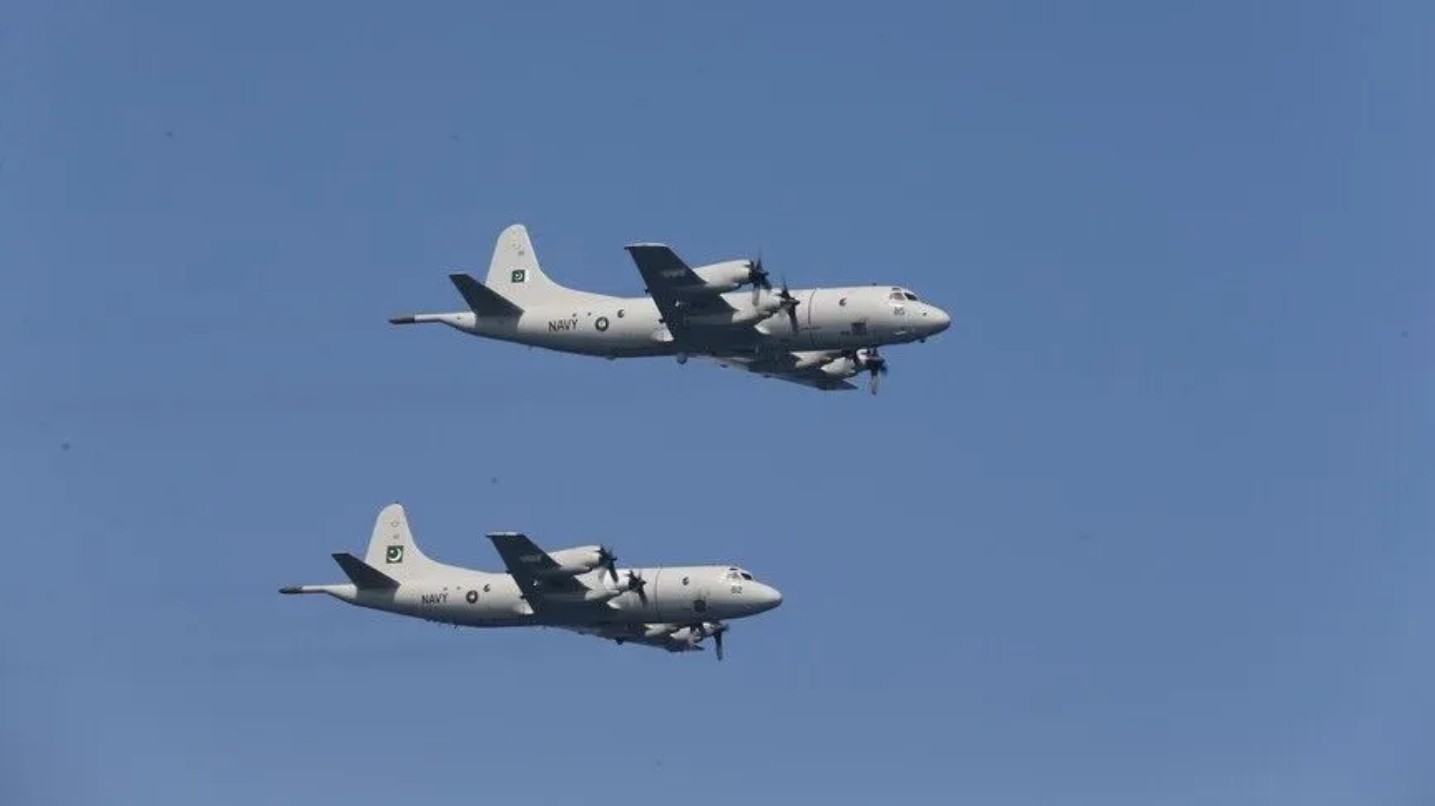
Pakistan's existing military presence in Saudi Arabia provides a practical foundation for the defence cooperation outlined in the new alliance. Photo: AA
This is an extremely dangerous situation for Pakistan. The widening conflict could draw in a country that has so far kept out of the Iran war and tried to help broker a negotiated end to it. Pakistan's involvement in a conflict that does not affect it directly, and could draw it into a separate conflict with Tehran, would have serious consequences for its political stability and internal security.