From the history archives to the state media to the presidency, something is happening in Vietnam. New rules, new restrictions and new structures all point to a change in the political system, as Bill Hayton reports.
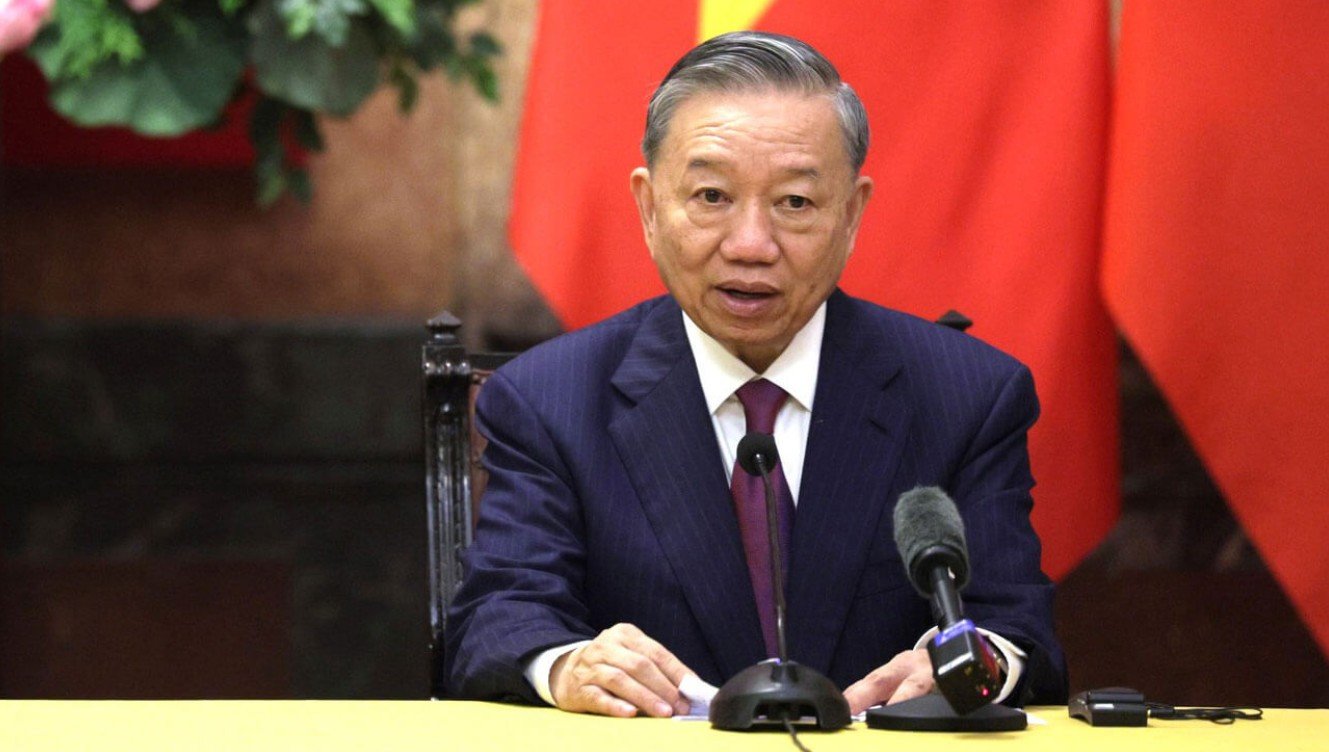
Vietnamese leader To Lam has consolidated power while pursuing ambitious economic reforms, prompting comparisons with Xi Jinping’s model of governance in China. Photo: Wikimedia Commons/CC BY 4.0
Nearly 14 years after Xi Jinping took power in China, the leadership in Vietnam is following in his footsteps. While the economy is being encouraged to let rip, political control is being concentrated in fewer hands and the space for independent thinking is shrinking.
In recent months, for example, researchers in Vietnam’s history archives have reported that the number of files they are able to access has been shrinking. A new law, which came into effect last year, has resulted in whole subject areas being taken offline with academics no longer able to examine historical records of Vietnam’s dealings with foreign countries, among other subjects. The fact that the Politburo of the Communist Party of Vietnam (CPV) issued three regulations on the subject tells us this is something the party takes very seriously. The Chinese archives did something similar back in 2014 as a prelude to taking much greater control of the teaching of national history.
 Recent reforms have brought major state media organisations under more direct Communist Party oversight, narrowing space for independent criticism.
State-owned media are also being placed under tighter control. In April, the Voice of Vietnam (VTV) and the Vietnam News Agency were placed under the direct management of the CPV Central Committee. While this might seem like a minor change, given that the government is run by the CPV, it reduces the political space for the expression of even the mildest criticism of official policies. Again, this copies a decision taken by the Chinese authorities back in 2018.
But the most visible China-style change is the decision by the CPV to combine the roles of party general secretary and state president. This is something that has only been done on a temporary basis in recent Vietnamese history. In a vote of the National Assembly in April, the CPV made this a formal arrangement, copying the situation in China. Until this year, the CPV preferred to spread power across four or five senior figures. But the general secretary of the CPV, To Lam, will now hold a key state role in addition to his control of the Communist Party’s structures.
 Vietnam’s National Assembly has formally endorsed changes that further concentrate political authority within the Communist Party leadership. Photo: Reuters
In short, the Communist Party is taking direct control of the levers of power in Vietnam. More precisely, a group from the Ministry of Public Security, which considers itself the ‘sword and shield’ of the party, is taking over. Even more precisely, a group connected with the Hung Yen province department of the Ministry of Public Security is now in charge. This network of To Lam’s allies is, in effect, a state within a state within a state within a state.
The main reason for concentrating power in the hands of such a small group is that the CPV knows that it is embarking on a very risky strategy. It has set an extraordinarily ambitious growth target – to achieve high-income status by 2045, the centenary of the declaration of independence by the (communist-led) Democratic Republic of Vietnam. To Lam has declared that this would complete Vietnam’s transition to socialism. But to do that, the economy needs to grow at around ten per cent a year for the next two decades.
The only way to achieve that is to unleash the country’s entrepreneurial spirit. Since taking power in 2024, To Lam has been downsizing the state, restructuring local government and even declaring that officials shouldn’t pursue an anti-corruption agenda too zealously if it would inhibit growth. This amounts to a reversal of his predecessor’s attitude, for whom corruption was a mortal threat to Communist Party rule. Instead, To Lam is hoping that by keeping the reins of power close to him and his network, he can prevent things getting out of control.
All parts of the state are being told to go for growth. Infrastructure investment will be a big driver of the domestic economy, at least for the next few years. But many developments, like a plan to redevelop the banks of the Red River in the capital Hanoi, will displace thousands of people. Their objections will not be allowed to get in the way of progress. The same is true of the plans for a Trump golf course in To Lam’s favourite province, Hung Yen.
 The skyline of Hanoi, Vietnam’s capital, reflects the country’s ambitions as its leadership bets on rapid economic growth, infrastructure expansion and investment to achieve high-income status by 2045. Photo: Hieucd
The knock-on effects for freedom of thought and expression are already apparent. Until 2023, it was possible for relatively independent think-tanks to make public comments on policy. But after several climate and energy experts were arrested for criticising Vietnam’s plans to expand coal power, that space has closed. The National Assembly, once a venue where government ministers could be held accountable to some degree, has regressed to its previous ‘rubber stamp’ role.
Like China, the Vietnamese leadership is also working to extend its ‘long arm’ overseas. It has recently concluded a security agreement with Thailand that will worry the many Vietnamese journalists and activists based in Bangkok and elsewhere. Given that Bangkok is where organisations such as the BBC’s Vietnamese Service are based, the move is likely to have a chilling effect on independent media.
For many years, the Vietnamese leadership appeared to be more willing to accept a range of views in society and worked with international partners on many legal and political reforms. Those days now seem to be over. Like China, Vietnam is doubling down on the Leninist model of politics. The Communist Party will be in charge of everything and there will be minimal space for other forces.
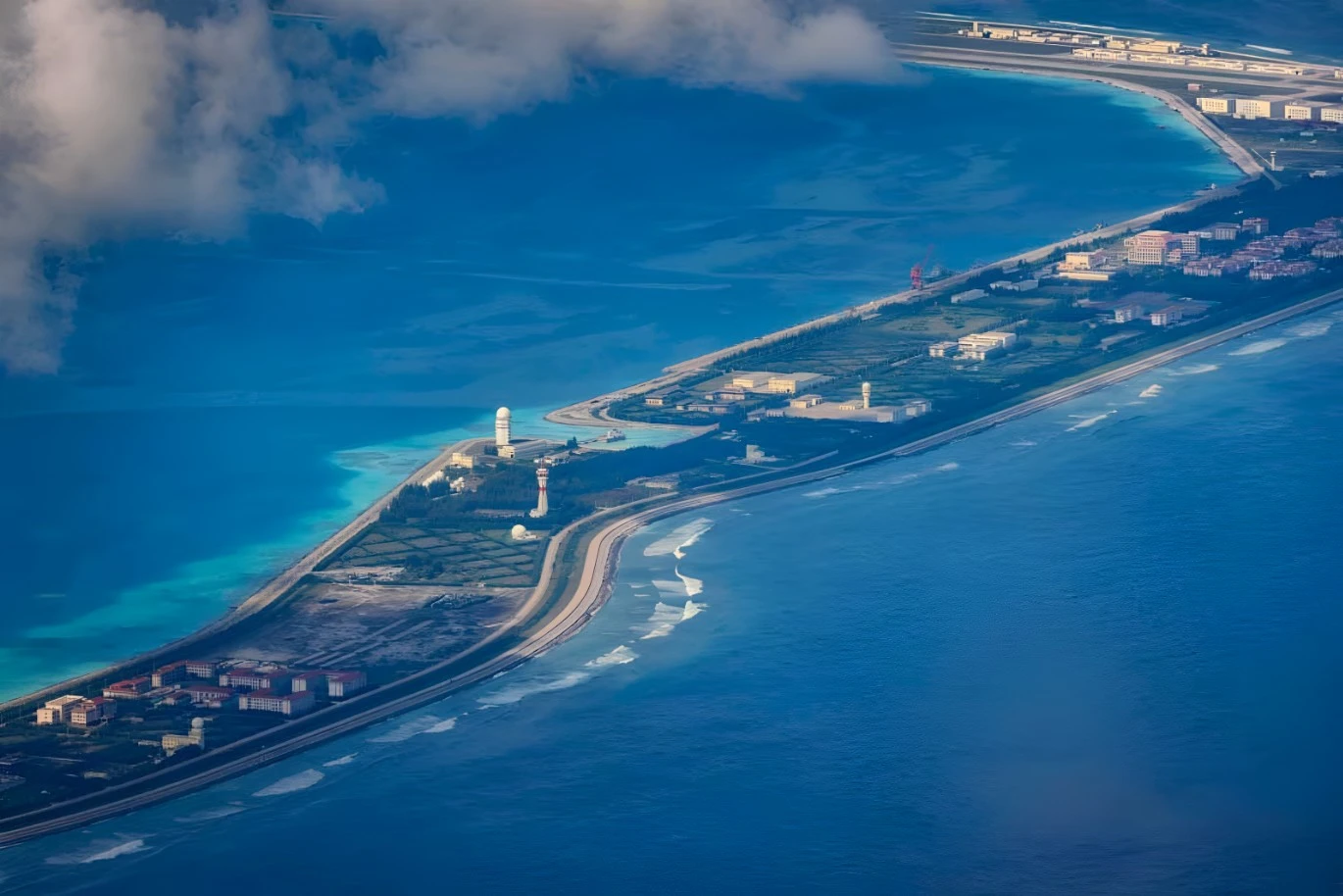
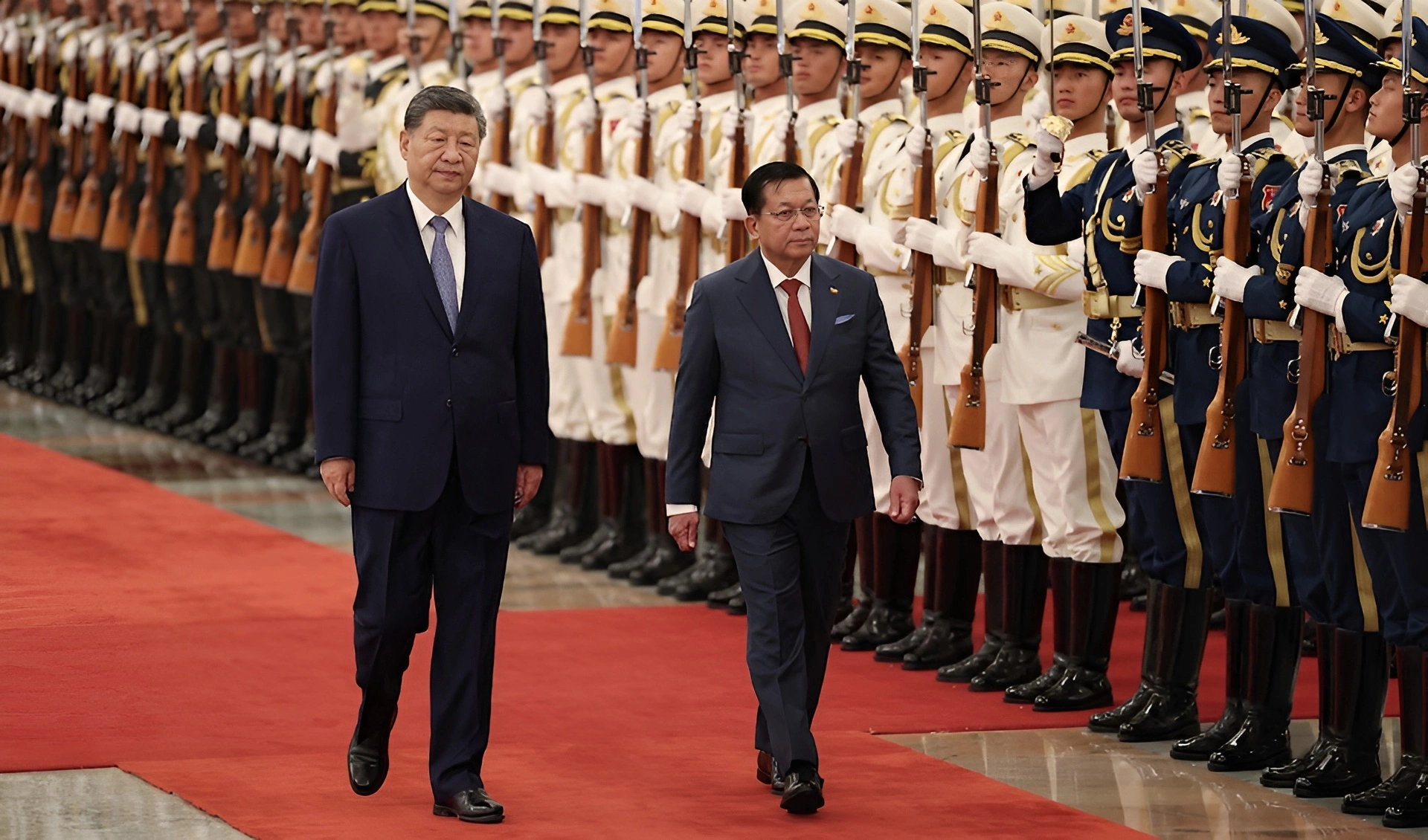
Although there are still problems in the relationship between the two countries, not least in the South China Sea, their ruling communist parties co-operate in the ‘dark arts’ of political control and managing a restive population. The two ministries of public security have frequent meetings to discuss ‘safeguarding political security’ and other relevant matters.
 The Ministry of Public Security has become increasingly influential under Vietnam’s new leadership, reinforcing the Party’s emphasis on political control and stability. Photo: VNA/VNS Photo Phạm Kiên
The risk, of course, is that the Party, or rather the small group currently directing the Party, does not have all the answers and will be found wanting when plans don’t work or when a crisis hits. When that happens, the country’s modernising spirits may have to be tamed in a very old-fashioned way.