Cambodia wants to show the world it is finally cleaning up its multibillion-dollar scam economy. But locals and experts warn that the syndicates’ roots remain deep, and that the business is dispersing across Southeast Asia rather than disappearing. Nyein Chan Aye reports.
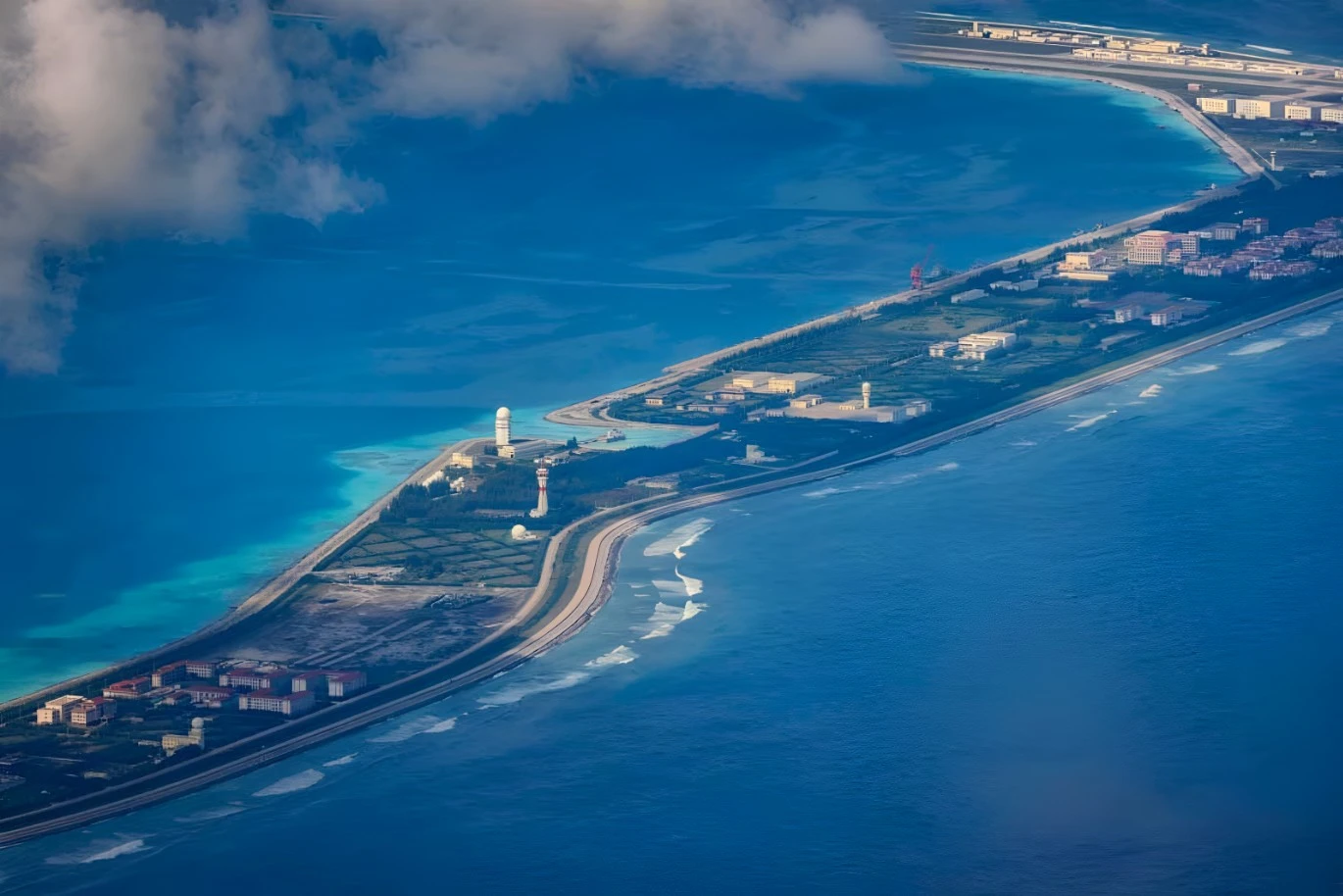
Large casino and entertainment complexes in Cambodia have become symbols of the country’s multibillion-dollar scam economy, which authorities say they are now working to dismantle. Photo: Ken Kobayashi
Cambodia’s government is trying to show the world that it no longer tolerates the scam economy that turned parts of the country into a global base for online fraud, forced labour and money laundering. The signs are visible: raids, deportations, extraditions, and a new cybercrime law. The money involved is enormous. A 2025 study by the US-based Humanity Research Consultancy estimated Cambodia’s scam industry to be worth $12.5 billion to $19 billion a year. An earlier United States Institute of Peace study estimated that Mekong-based syndicates steal more than $43.8 billion annually.
In Phnom Penh, 35-year-old construction worker Sophea is sceptical of government claims: ‘The general public believes online scams have not yet been fully and thoroughly cleaned up across the entire country’. He says the masterminds have not all been arrested and without investigations reaching powerful people, the crackdown would only touch ‘the fingertips or the tips of the nails.'
The official crackdown
Prime Minister Hun Manet ordered the authorities to attack scam networks ‘at the root’ without delay, tolerance or exception. In March the National Assembly passed a law criminalising online fraud, scam-centre leadership, recruitment, illicit data collection and scam-linked money laundering, with penalties up to life imprisonment and asset seizure. An April statement said the authorities had handled more than 250 online scam cases since July 2025 involving 91 casino sites and about 1,089 suspects. More than 13,000 foreigners had been deported since early 2025.
 Cambodian authorities have launched raids, arrests and deportations as part of a nationwide campaign against online fraud networks. Photo: AP
But experts say the official timetable itself shows the problem. Jason Tower, senior expert at the Global Initiative Against Transnational Organized Crime, pointed to the early promise that scam centres could be cleared out within one month. Tower said the industry involves an estimated 150,000 to 200,000 people. He said ‘this is not the kind of thing that just simply is shut off overnight.' According to Tower, the short timeline worried observers because it suggested a campaign-style operation rather than a long-term dismantling. Tower described the current situation as ‘a state of chaos,' with tens of thousands fleeing compounds: some trafficking victims, others criminal actors, and many stranded or at risk of extortion, re-trafficking or recruitment into new hubs.
Lindsey Kennedy, research director at the Eyewitness Project, sees this crackdown as more meaningful than previous ones. In the past, companies were tipped off and moved workers before raids. She said this time is different because some compounds were truly raided and bosses fled, allowing tens of thousands of victims to escape. But she shares Tower’s concern. Many companies have moved to Myanmar or Laos, she said, while ‘very few genuinely high-level arrests’ have been made, meaning the main players remain free to rebuild elsewhere.
In June a report by Amnesty International echoed those concerns, saying more than 70% of 86 identified compounds appeared to have been bypassed and none of 73 survivors interviewed had been recognised as trafficking victims.
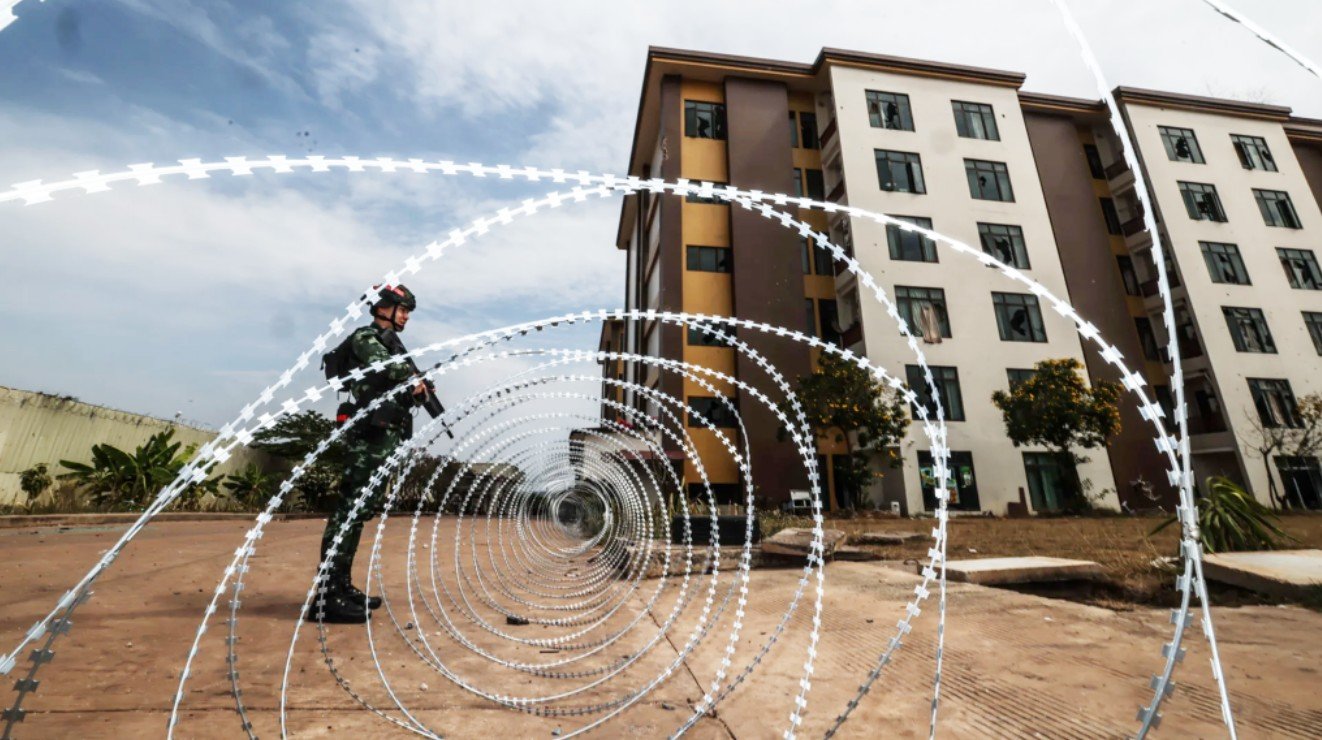
 Online scam compounds often feature razor wire fences and barred windows to prevent workers from escaping. Photo: Reuters
Exporting the crisis
The scam economy has never been only Cambodian. It is a regional business built on borders, casinos, real estate, fake recruitment, crypto laundering and corrupt protection. Victims are global; workers come from across Asia, Africa and beyond.
‘This is real disruption, but it is only impacting the visible front end—the compounds—of a deeper problem’, said Jacob Sims, a visiting fellow at Harvard University’s Asia Center and an expert on transnational crime and human rights in Southeast Asia. ‘The elites running the compounds remain unaccountable, and the primary money laundering and underground banking channels remain intact.’
Tower said one of the most serious consequences is that people were allowed to leave Cambodia freely instead of being processed through a law enforcement and victim-screening system. ‘Many of these are criminal actors who’ve flooded across borders into other countries where they’ve resumed scamming’, Tower said. ‘This has really become something of Cambodia’s gift to the world. They’ve unleashed this flood of scammers onto other countries.’
Reports of scam suspects and workers have appeared beyond Cambodia, from Vietnam and Indonesia to Sri Lanka and African countries such as Uganda. Cambodia and Myanmar remain major scam hubs, Tower said. ‘I don’t see that going away anytime soon’, he said, pointing to large scam parks along Myanmar’s border with Thailand and continuing operations in Cambodia and Laos.
 Experts warn that crackdowns in one country can push scam operators and workers across borders, spreading the problem throughout Southeast Asia. Source: Amnesty International
Pressure from Beijing
China now sits at the centre of Cambodia’s crackdown. Beijing’s pressure became more visible in April, when Chinese Foreign Minister Wang Yi and Defence Minister Dong Jun visited Phnom Penh. China’s Foreign Ministry said Wang told Cambodian officials that combating online gambling and telecom fraud was vital to public safety, and that both sides must ‘resolutely and thoroughly remove this cancer.' Cambodian Foreign Minister Prak Sokhonn said Cambodia would ‘resolutely combat’ those crimes with China.
Kin Phea, director general of the International Relations Institute of Cambodia, said Cambodia’s response is driven by both domestic priorities and Chinese engagement. China, he said, wants to protect its citizens, fight transnational crime and protect its regional reputation, while Cambodia wants stability and credibility. China is taking the scam issue more seriously, Sims said, partly because it has become embarrassing for Beijing at home and abroad.
Tower sees a more complicated China story: ‘China helped to enable all of this,' he said, referring to Chinese state-owned enterprises that built infrastructure later used as industrial-scale scam compounds and to China-linked criminal actors in Cambodia. But since 2023, China has also increased pressure as the United States, Britain, South Korea and others exposed, sanctioned and indicted scam operators.
Beyond the compounds
The raids have hit the compounds. They have not yet proved that Cambodia can hit the system behind them. Sims said Cambodia’s scam economy ‘appears to go well beyond a traditional law enforcement issue’, and described it as linked to ‘the upper echelons of the ruling party’s elite patronage system.' The main beneficiaries, he said, are political and economic elites who gained as landlords and protectors of the syndicates.
Kin Phea said the issue is now understood in Cambodia as more than policing. It touches governance, national reputation, economic sustainability and social trust. A meaningful response, he said, requires regional coordination, intelligence sharing, financial monitoring, cybercrime enforcement and anti-corruption measures.
 Workers say the rise and fall of scam-linked developments has left many ordinary Cambodians facing economic uncertainty and debt.
For construction worker Sophea, the issue is not abstract. Scam-linked buildings, casinos and Chinese-backed projects may create short-term work for drivers, construction workers and suppliers. But after raids, he said, buildings are shuttered, vehicles are returned damaged, and ordinary people are left with debt and hardship. He wants a cleanup that reaches everyone. ‘We want to see a deep, transparent and fair cleanup under the law—one with no exceptions’. Only then, he said, can Cambodia restore trust among citizens and investors, and rebuild an economy known not for scam compounds, but for honest work.