When Bangladesh’s new BNP-led government assumed office, Rohingya refugees once again found themselves listening closely to the language of power in Dhaka. The familiar words had returned: repatriation, shortage of funds, national security, and international cooperation. Sushmita S Preetha reports from Dhaka.
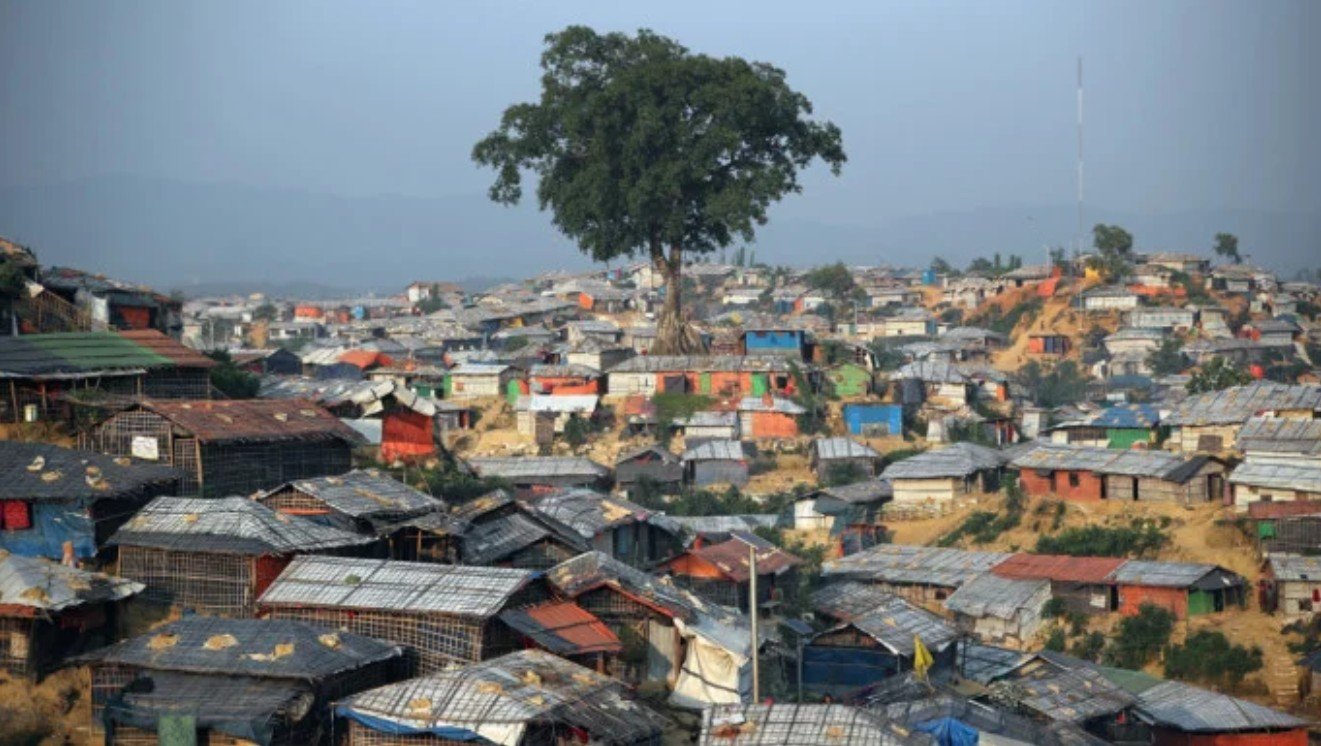
Nearly 1.2 million Rohingya refugees live in camps around Cox's Bazar, as prospects for safe and voluntary repatriation to Myanmar remain distant. Photo: Reuters
Prime Minister Tarique Rahman said before the election that the Rohingya would be welcome to remain in Bangladesh until it was safe for them to return. His government has since reaffirmed that the only sustainable solution is their ‘safe, voluntary and dignified’ repatriation to Myanmar. Few would disagree. The Rohingya belong in Myanmar, with citizenship, safety and rights restored. Bangladesh cannot be expected to carry indefinitely a crisis created by Myanmar’s persecution and sustained by international failure.
But almost nine years after the 2017 exodus, repatriation has become a way of avoiding the much harder question: what rights and protections will the Rohingya have while safe return remains nowhere in sight? That question has become more urgent as the crisis grows more protracted and international support recedes. In May, the United Nations and its partners appealed for $710.5 million for the Rohingya response in 2026, to support up to 1.56 million Rohingya refugees and Bangladeshi host community members. The appeal is 26 per cent lower than the amount sought in 2025. The UN has itself described the plan as ‘scaled-down’ and ‘hyper-prioritised’, covering the minimum required to sustain life-saving assistance.
This is the grim arithmetic of the present moment: more people in need, fewer resources available, no credible path to return, and diminishing political willingness internationally to confront either Myanmar or the humanitarian consequences of its violence. Around 1.2 million Rohingya now live in Bangladesh, while renewed conflict in Rakhine State has pushed further arrivals across the border. In April, food support in the camps was reduced: the most severely food-insecure households continue to receive $12 per person per month, while others received as little as $7.
 Humanitarian agencies have repeatedly warned that declining international funding is forcing reductions in assistance for Rohingya refugees. Photo: WFP
While Bangladesh’s burden is repeatedly acknowledged by the international community, declining funding has forced the humanitarian response to shift from sustaining lives with dignity to rationing increasingly limited forms of survival. The 2026 appeal, reduced even as the refugee population and its needs have grown, signals the normalisation of long-term containment without the political or financial commitment required to make that containment humane.
In effect, the absence of progress towards a durable solution is being managed through progressively lower standards of support for a population with little control over the conditions of its own survival. ‘Bangladesh always believes in peaceful, dignified and sustainable migration; however, the Rohingya crisis has now become a complex and sensitive issue that poses a threat to our national security’, said Bangladesh’s Home Minister Salahuddin Ahmed, during a meeting with the UN Resident Coordinator in May. He called for increased humanitarian funding under the UN framework to address the crisis.
Bangladesh has legitimate reasons to demand substantially greater international support. The country did not create the persecution that displaced the Rohingya. Host communities in Cox’s Bazar have absorbed enormous social, economic and environmental pressures over the last decade. But Bangladesh’s own policies, which include confinement, restrictions on formal education and livelihoods, and the insistence that any meaningful improvement in refugees’ lives risks weakening the commitment to repatriation, have helped produce the conditions now being cited as evidence of the crisis.
 Refugee advocates argue that access to recognised education is essential if Rohingya children are not to lose an entire generation of opportunity. Photo: UNICEF
This is the contradiction that the new government inherits. The Rohingya are repeatedly described as dependent on humanitarian aid, as though dependency were intrinsic to refugee life. In reality, their vulnerability is closely tied to the denial of legal opportunities to work, move and study. As assistance shrinks, many refugees are compelled to find informal work in and around the camps, through small trading, day labour, transport work or poorly paid humanitarian roles. Because this work has little legal recognition, it leaves them vulnerable to exploitation, harassment, unsafe conditions and arrest. At the same time, the absence of recognised education, safe mobility and lawful income leaves young people with fewer routes towards a viable future and greater exposure to trafficking, criminal networks and armed influence.
These are genuine security concerns in the camps, as highlighted by the home minister. But they cannot be separated from a containment policy that restricts the very opportunities that might reduce desperation and insecurity.
 Restrictions on movement, employment and daily life remain central features of Bangladesh’s containment-based approach to the Rohingya crisis. Photo: Rohingya Creative Production
For the BNP government, the politics of repatriation also carries a particular history. Government statements recall the repatriation of Rohingya during the BNP governments of the late 1970s and early 1990s as examples of successful leadership. In parliament, the foreign minister cited the return of 236,000 Rohingya under Khaleda Zia, mother of the present prime minister, after the 1992 influx. But political memory is not shared equally. Dhaka’s narrative of earlier repatriation as decisive diplomacy sits uneasily beside Rohingya memories of return without durable rights, safety or any protection against being displaced once again.
Recent reporting from the camps suggests that refugees are not optimistic. Some hope the change of government may bring attention to their rights. Others fear that invocations of past repatriation drives may foreshadow renewed pressure to return before safety and citizenship are secured. Their concerns extend beyond return itself: they want education, livelihoods, movement and dignity while they remain in Bangladesh.
The political terrain in Myanmar has also fundamentally changed. The Myanmar military, responsible for the mass atrocities that forced hundreds of thousands of Rohingya into Bangladesh in 2017, no longer exercises authority in much of Rakhine State. The Arakan Army’s rapid territorial expansion has altered power on the ground, particularly in northern Rakhine, while reports of abuse, insecurity and fraught relations with Rohingya communities persist. Any repatriation today faces a basic question: return to whose authority, under what guarantees, and protected by whom?
 Ongoing conflict and uncertainty in Myanmar’s Rakhine State continue to undermine prospects for a safe, voluntary and dignified return. Photo: Reuters
The new government has inherited an impossible crisis. It has also inherited the temptation to offer old solutions to a radically transformed reality: more diplomatic declarations, more appeals to the international community, more assurances that return remains the answer, even as the conditions for return recede further. There has been no indication that the BNP will consider a rights-based interim policy for the Rohingya, including expanded formal education, regulated income-generating opportunities, safer mobility, meaningful participation in camp decisions, and protection against any return driven by coercion, inducement or desperation. A government that repeatedly invokes repatriation without articulating refugees’ rights in the present ends up offering an exit strategy for Bangladesh rather than a durable solution for the Rohingya.
The question before the BNP government is therefore stark. Will it treat repatriation as a promise of justice for the Rohingya, or as justification for denying them a liveable present? A people driven from their homeland cannot be kept in indefinite deprivation to preserve the fiction that their displacement remains temporary.