Afghanistan has been mostly off the front pages since the Taliban came to power there just over five years ago after two decades of insurgency. The country is even more ‘in the shadow’ as regional and international attention shifted firstly to Ukraine and Gaza and now to Iran. Dawood Azami, who was previously based in the Afghan capital Kabul, explains how Taliban rule has changed the country.
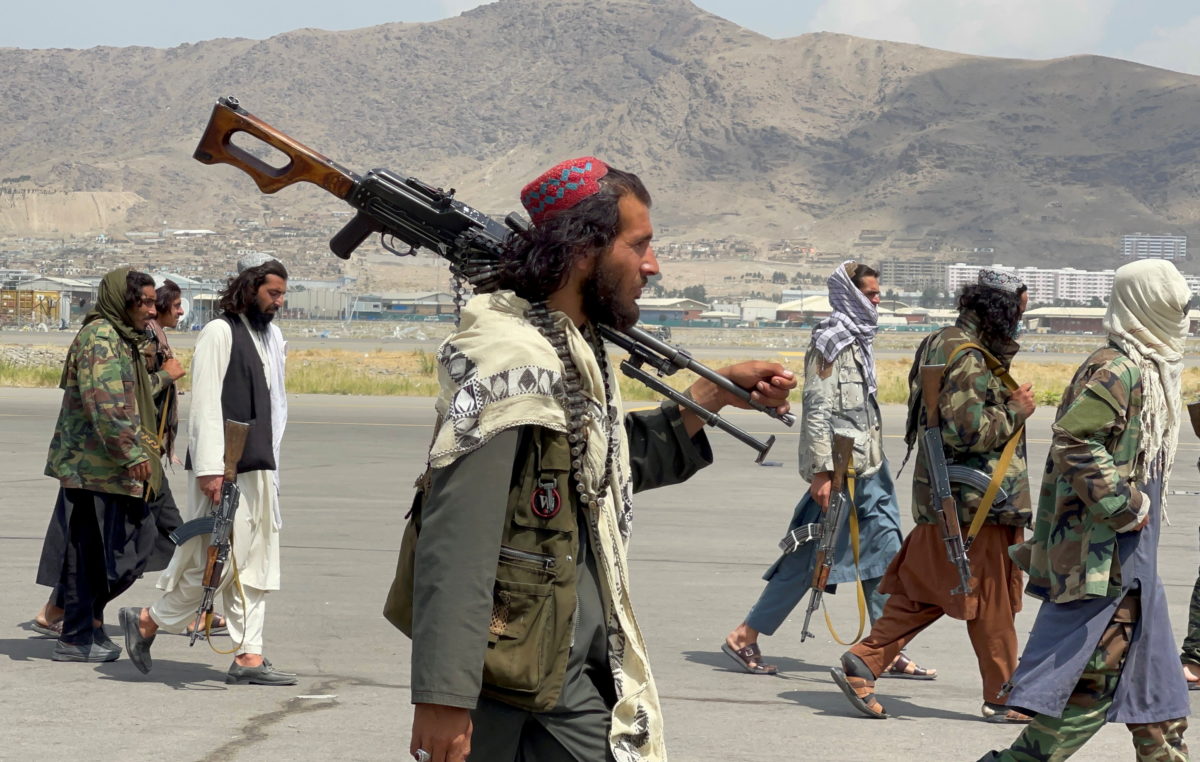
Taliban members walk through Kabul airport following the movement’s return to power in Afghanistan in August 2021. Photo: AP
The Taliban is a religious and revolutionary movement with a mission centring on the transformation of Afghan society on religious lines, and the establishment of a distinctive Islamic system aligned with their ideological vision. They treat the country as an emirate centralised around the Emir or Amir, or Supreme Leader, who is both a political and religious head.
During its insurgency (2001-2021), the Taliban’s supreme leaders ruled through a leadership council or Rahbari Shura and deputies who were also key members of the council. The current Amir, Mawlawi Hibatullah Akhundzada, 60, became the group’s leader a decade ago, in May 2016. Since the group returned to power in August 2021, Hibatullah Akhundzada has gradually expanded his control and influence over all affairs of the government as well as the Taliban organisation. He has removed the deputies and abolished the leadership council.
Mawlawi Akhundzada sits in the southern city of Kandahar, the birthplace of the Taliban movement, holding supreme veto power, and providing ideological framework for governance and usually ruling through decrees. The cabinet, headed by Mullah Muhammad Hasan Akhund, the de facto prime minister, handles day-to-day governance from the capital, Kabul. Mawlawi Akhundzada holds absolute authority over political and military affairs, relying mostly on a circle of like-minded religious scholars around him in Kandahar as well as in Kabul.
Mawlawi Akhundzada controls all branches of both the Taliban administration and organisation and holds unlimited authority over law enforcement. He makes or approves all the senior and mid-level government appointments ranging from ministers and departmental heads in the capital Kabul to provincial officials including governors and security commanders. Even the agenda for cabinet meetings and developmental projects are approved by his office.
Clerical rule
The word ‘Taliban’ (طالبان) is the Pashto plural form of the Arabic word ‘talib’ which literally translates as ‘seeker of knowledge’. In the context of Afghanistan and the surrounding region, it has been used historically to describe students enrolled in Islamic religious schools, known as madrassas.
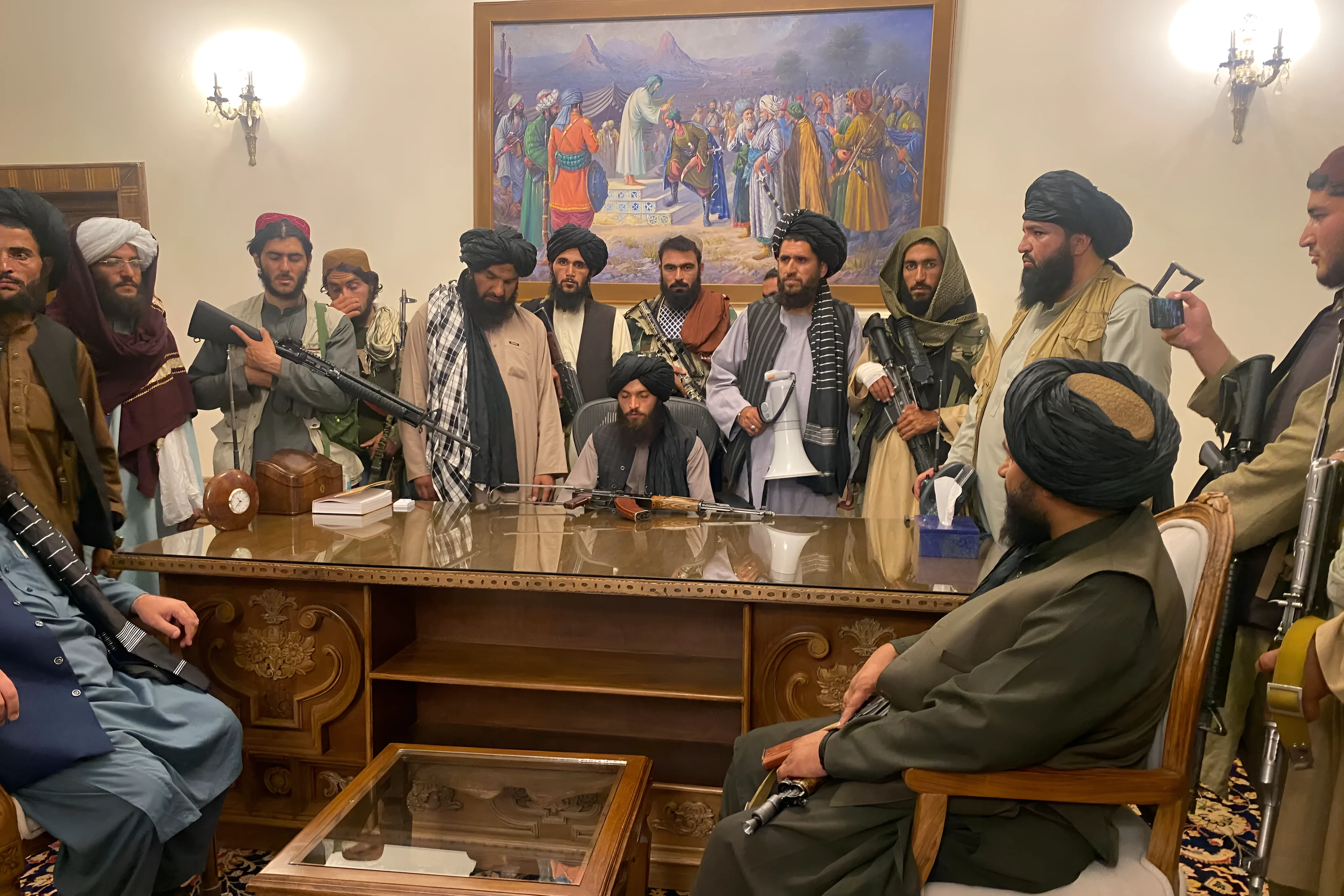
Taliban fighters take control of the Afghan presidential palace in Kabul on 15 August 2021, marking the movement’s return to power after two decades of insurgency. Photo: Zabi Karimi/AP
The Taliban movement was founded under the slogan of peace, justice and Sharia law in 1994 when various mujahideen commanders were engaged in a bitter factional war and managed to capture Kabul in September 1996. After the toppling of the first Taliban government by the US-led military coalition in 2001, a number of other Afghans, mainly from rural areas, also joined the group for a variety of reasons, including religious conviction, nationalism (what they saw against a foreign invasion), retribution (for injustices and harms in military operations) and the establishment of general law and order. Leadership of the group remains in the hands of the clerics since the foundation of the movement, but the rank and file also consist of people who are not traditional members.
Religious scholars have considerable influence in the traditional Afghan society performing religious duties and mediating in conflict resolution among other roles. However, historically, the clerics’ role and influence were generally inferior to those of political leaders and tribal elders. This is the first time in recent Afghan history that clerics and the religious class have gained total political power. Most high-ranking officials in the government, both nationally and locally, are clerics who studied religion in madrassas.
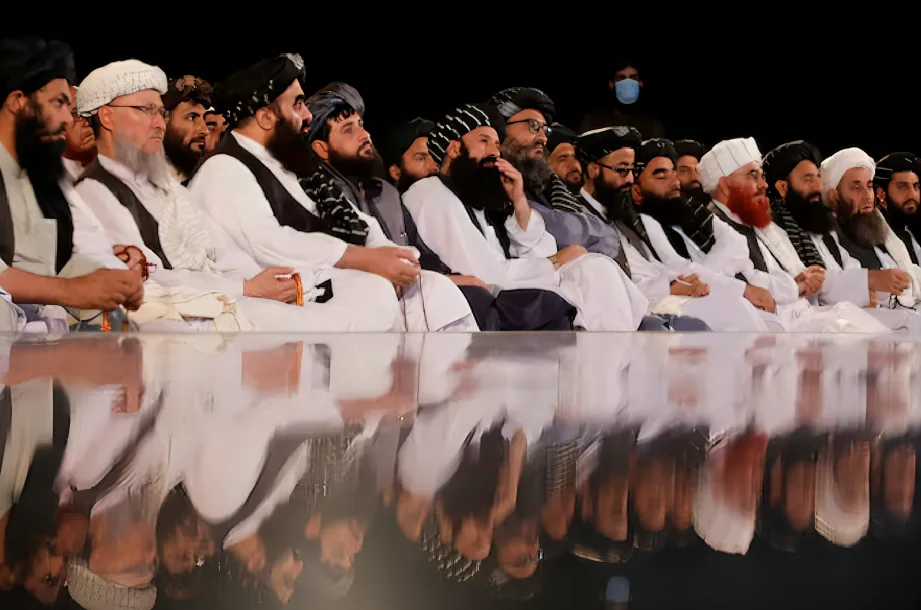
Taliban leaders attend a ceremony marking the first anniversary of their return to power in Kabul in August 2022, underscoring the movement’s consolidation of control over Afghanistan. Photo: Ali Khara/Reuters
The Taliban’s supreme leader emphasises the importance of the role of religious scholars in both political and social affairs calling them leaders and guides. Speaking in early September 2026, he told a group of madrassa administrators in Kandahar that religious scholars were successors of the prophets and their companions and that it was their responsibility to lead, guide and reform society, correct the morals of the people and remove mischief and corruption.
Public criticism of the Amir or his policies is not permitted. Obedience to the Amir’s orders by government officials and the public is seen as a religious duty; insubordination and dissent are treated as religious offences. In an increasingly centralised governance structure, all segments of the organisation and government are accountable to the Amir himself.
Power structure
The Taliban captured power by force and established a one-party system, which has some resemblance to ideological and revolutionary regimes established previously in Afghanistan and elsewhere in Asia and Africa.
Within the Taliban system, the distribution of top government positions is based mainly on three principles: firstly, trust and loyalty; they are careful about allowing outsiders to their inner circle and key decision-making process; and second, role and responsibility (in the insurgency). Having fought for two decades against the US/NATO forces and the Afghan government they backed, almost all current high-ranking officials emerged from that insurgency. And thirdly, reward and award. Many government officials and their family members endured hardship ranging from death and injury by torture, military operations and detention in prisons in Afghanistan, Pakistan and the US base in Guantanamo Bay, Cuba.
Governing in the shadows
Mawlawi Hibatullah Akhundzada hails from a humble background: his father was a mullah in a small village mosque in Kandahar. Within the group, he is revered as an accomplished religious scholar and an expert on the Quranic exegesis (Tafsir), prophetic tradition (Sunnah) and Islamic jurisprudence (Usul al-Fiqh), another reason those leaders who have different opinions about certain social and political issues find it hard to challenge him.
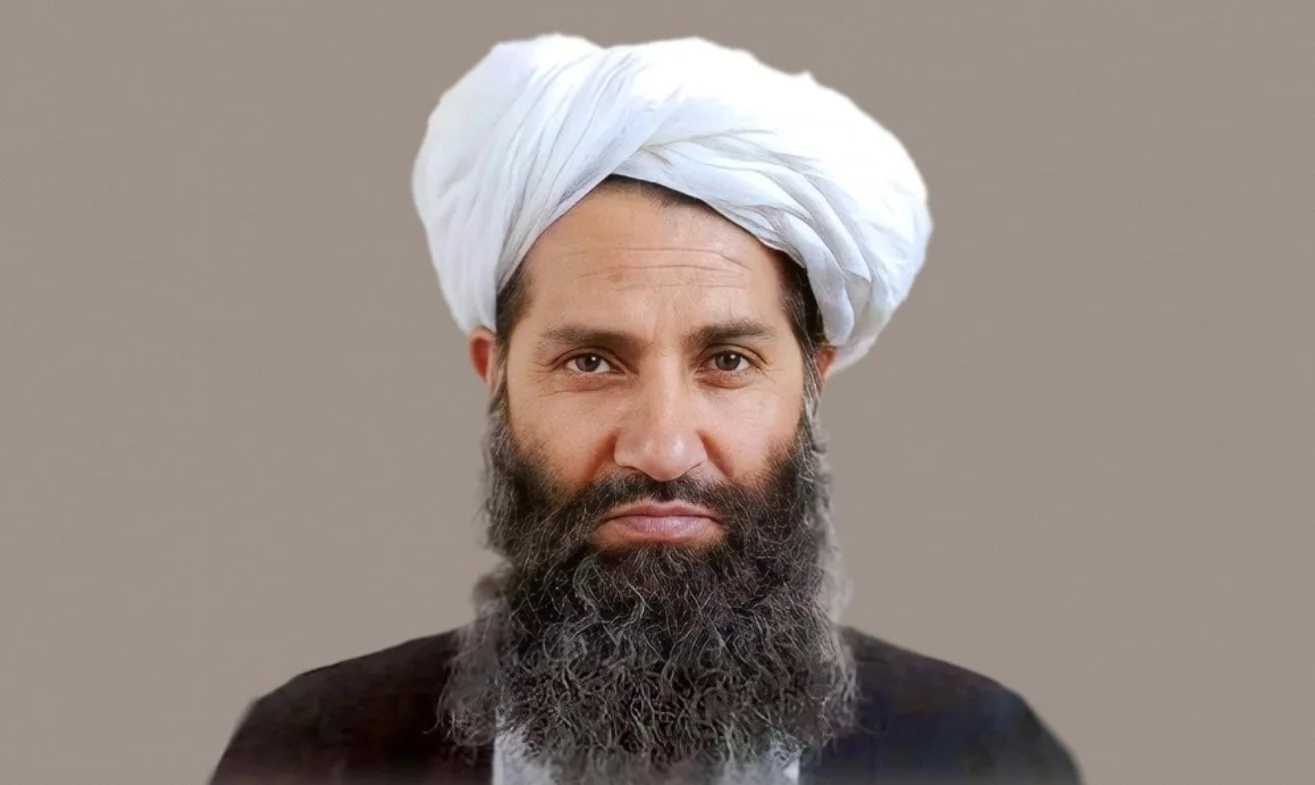
Mawlawi Hibatullah Akhundzada, the Taliban’s supreme leader, holds ultimate political and religious authority within the movement’s system of rule in Afghanistan.
Mawlawi Akhundzada also comes from a Sufi background, believing in divine guidance incorporating Ruya (true night dreams) and Istikhara (prayer for guidance and humble request for Allah to pave the way for what is good and beneficial) into political decision-making. He is an extremely reclusive figure and rarely travels to the capital Kabul and other provinces. He maintains almost no digital footprint, with only one widely circulated photo, which is decades old.
Audio recordings of his speeches at various occasional gatherings and written statements based on his remarks made in group meetings with officials from various sectors, religious scholars, and people from other sectors of life are shared publicly. He usually speaks about the importance of upholding the divine law and serving the people and reminds them of their priorities, duties, and responsibilities.
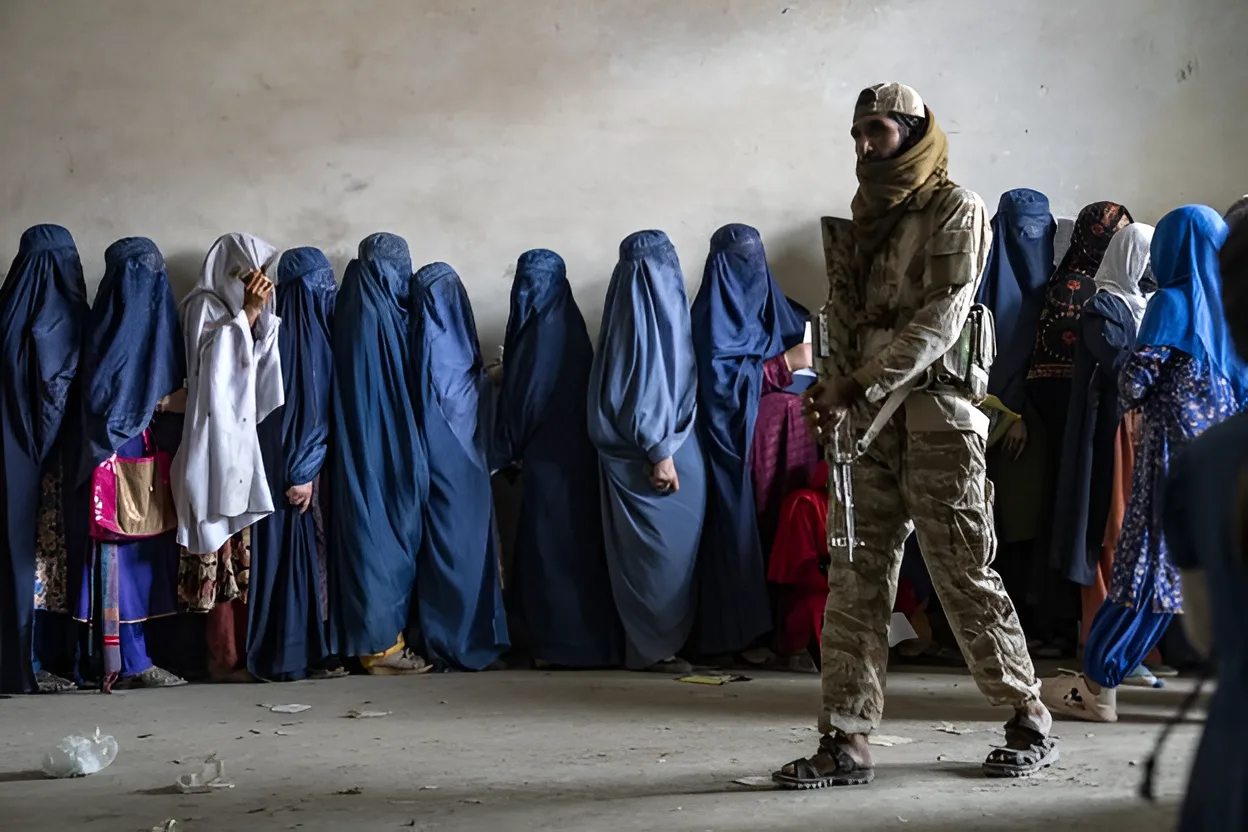
Restrictions on women and girls have become a defining feature of Taliban rule and remain a major issue in Afghanistan’s relations with the outside world. Photo: Ebrahim Noroozi/AP
His actions and policies show that he prioritises what he sees as religious legitimacy and conformity over international recognition and claims that state policies stem from divine inspiration. On the other hand, recognition of the Taliban as the legitimate government of Afghanistan by the wider international community has been generally tied to, among other things, the establishment of an inclusive government and respect for human rights, in particular the rights of women and girls.