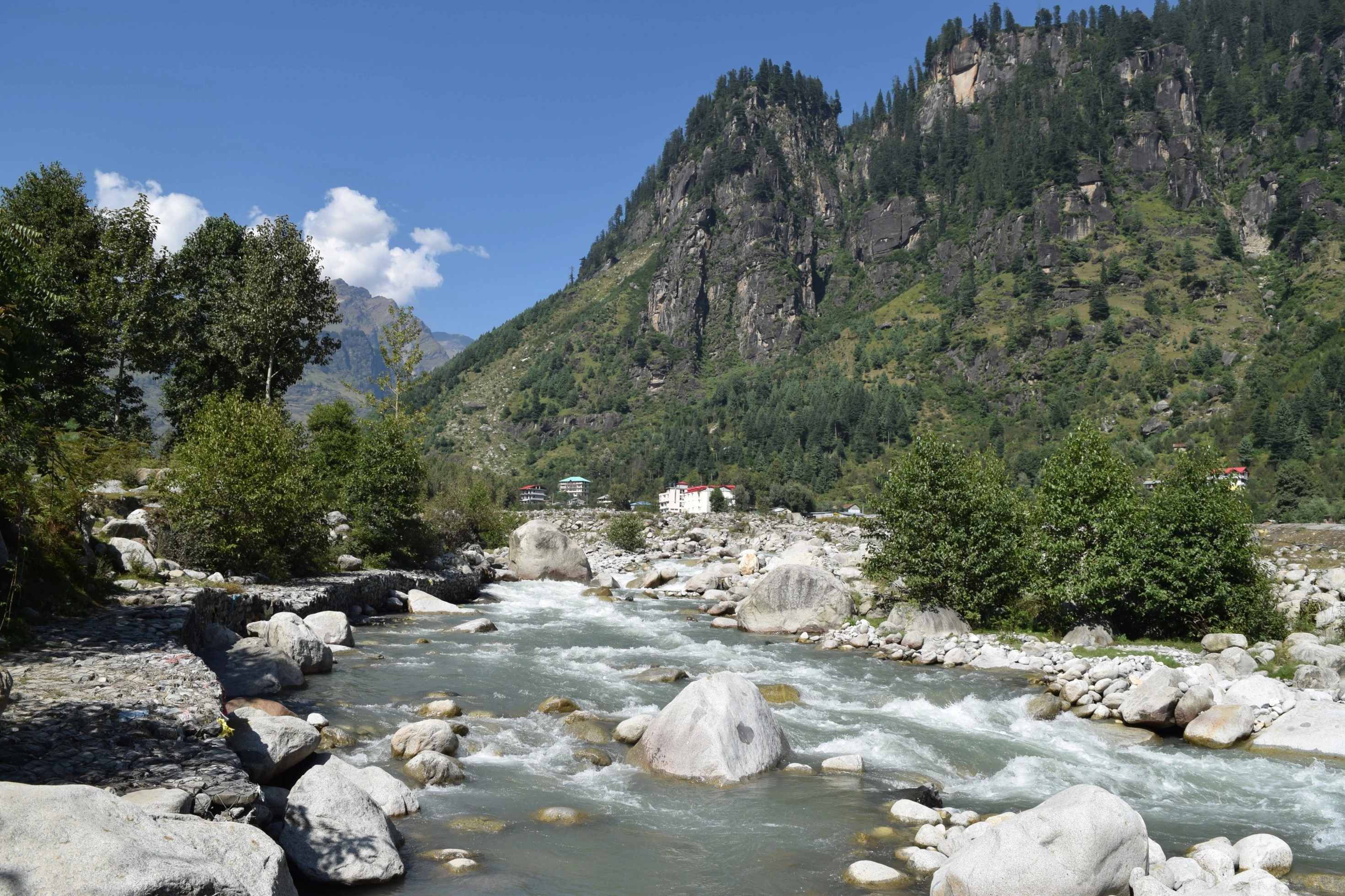
On 26 August, a glacier and the bedrock beneath it collapsed high in Nepal's Rasuwa district, home to the Langtang valley. The resulting mass of ice, rock and debris swept through the valleys below, destroying settlements, roads, bridges and hydropower infrastructure. More than 8,000 people in Nepal and Tibet are reported dead or missing. At least 13 hydropower projects were affected with rescue teams still searching for workers believed to be trapped inside project tunnels. Udisha Saklani reports.
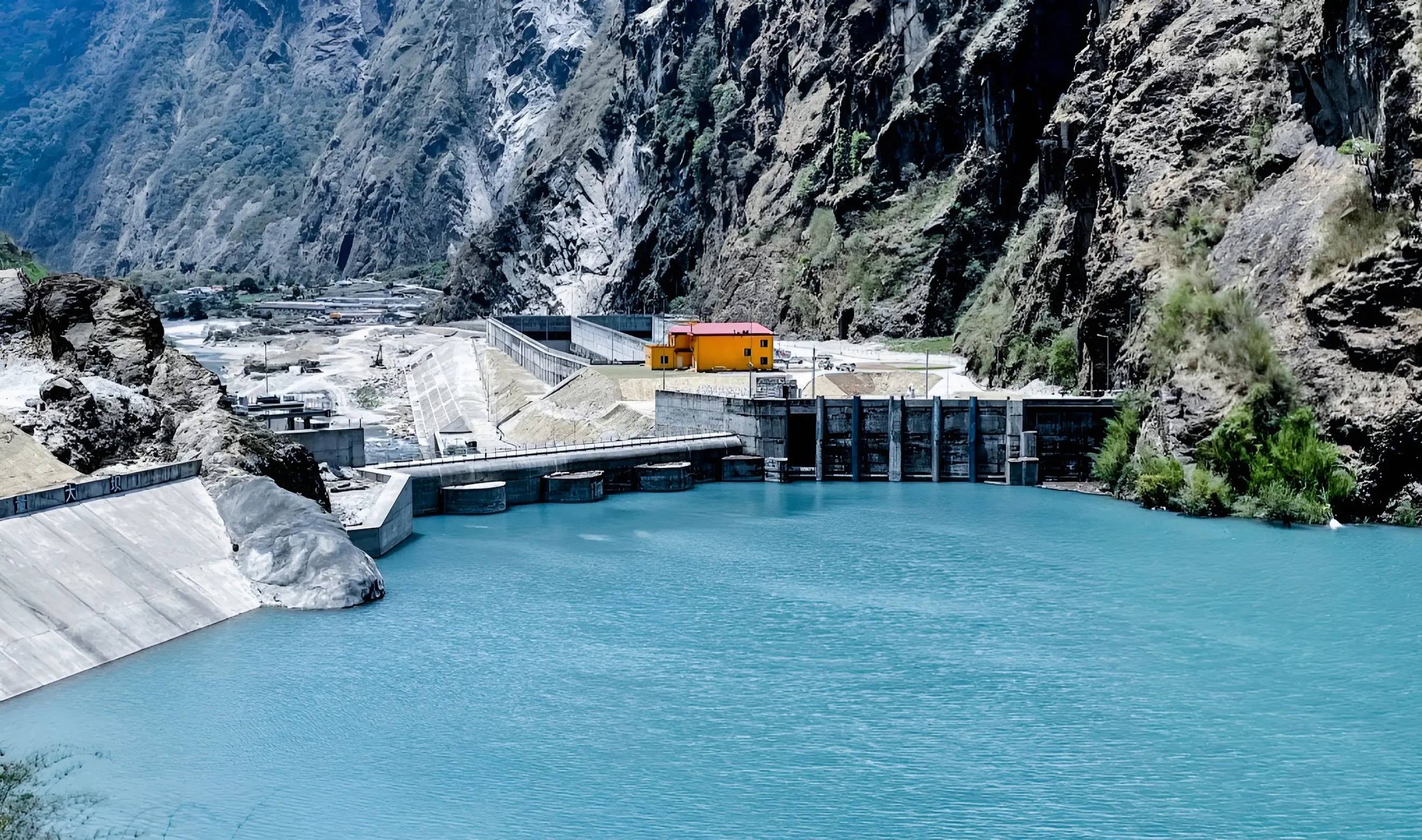
The Upper Tamakoshi Hydropower Project in Dolakha, Nepal, reflects the Himalayan region’s vast hydropower potential and the risks of building infrastructure in its rugged terrain. Photo: Upper Tamakoshi Hydropower Project
There are important questions about what caused the collapse and how far climate change contributed to the event. Scientists have pointed to warming, glacier retreat and thawing permafrost as possible, although the precise causes will take longer to establish.
But the disaster raises another question. As Nepal and its Himalayan neighbours invest billions of dollars in hydropower, are they fully accounting for the risks of building infrastructure designed to last decades in a changing mountain environment?
For Nepal, the stakes are considerable. The government plans to increase electricity-generating capacity from around 3,500 megawatts in 2025 to 28,500 MW by 2035. It expects 15,000 MW eventually to be exported, principally to India and Bangladesh. Meeting the target is estimated to require another US $46.5 billion in investment.
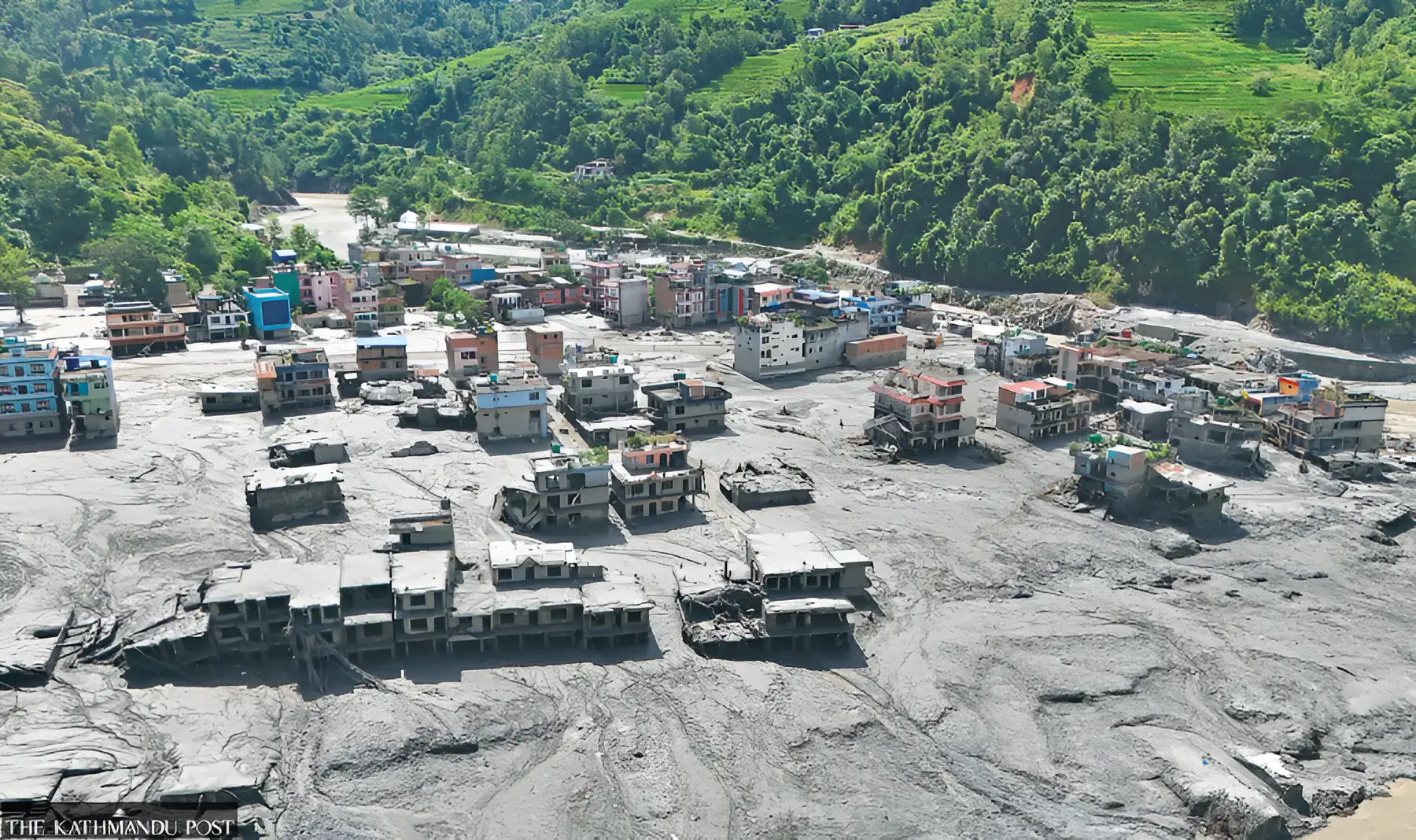 The Rasuwa disaster exposed the vulnerability of hydropower infrastructure to extreme mountain hazards. Photo: Hemanta Shrestha/TKP
Bhutan has similarly ambitious plans. Its 2025 National Energy Policy targets 20,000 MW of installed hydropower plus 5000 MW of solar power by 2040, up from around 3,500 MW at present. The policy also opens the sector further to private and foreign investment.
The attraction is easy to understand. Mountain rivers offer large quantities of low-carbon electricity, while power exports can generate revenue for relatively small economies. Yet the same plans depend on projects operating and producing returns over several decades. The economics therefore rest partly on what happens to those projects over the next 30, 40 or 50 years.
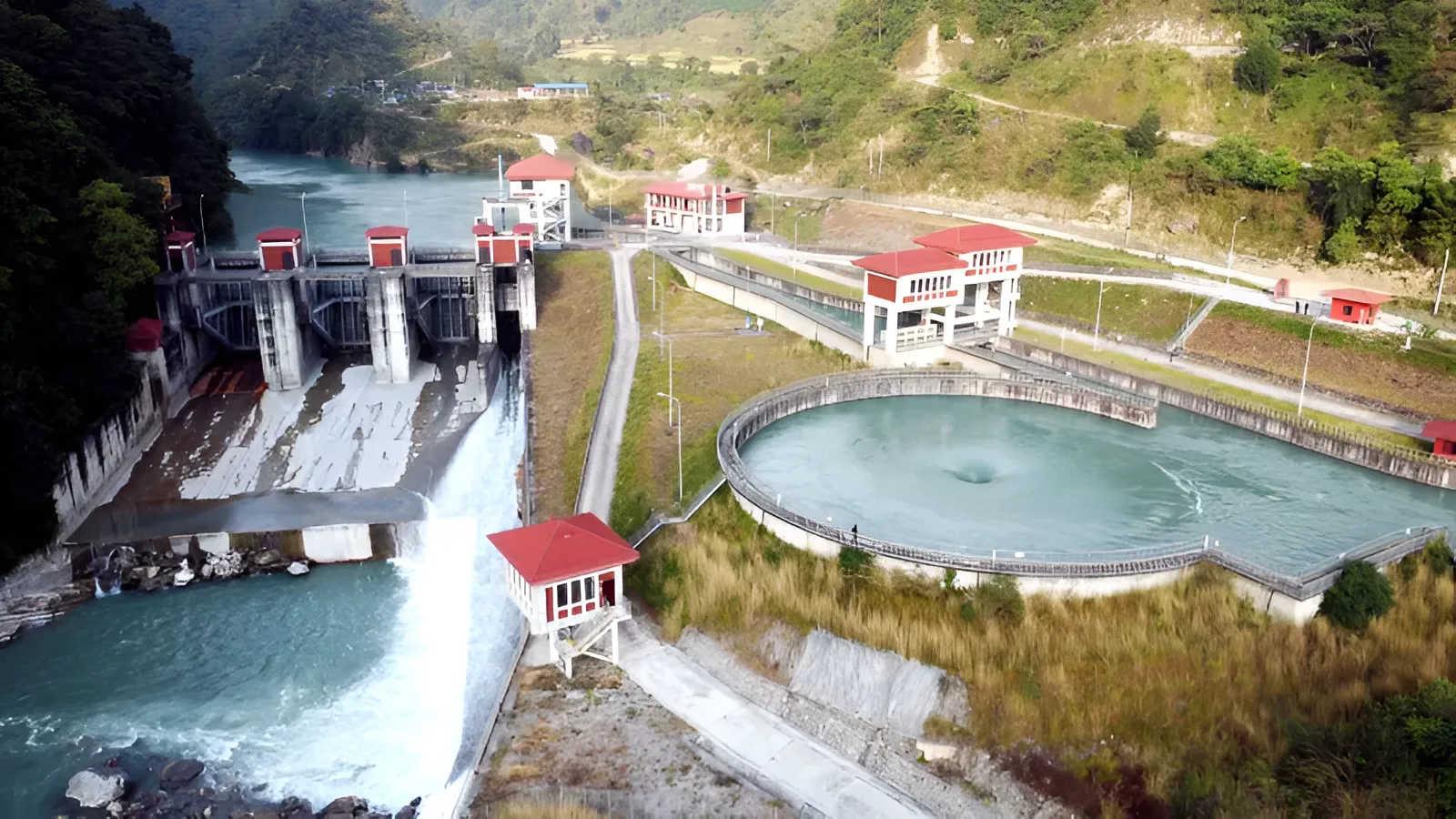 The Upper Marsyangdi-A Hydropower Project in Bhulbhule, Lamjung, highlights the long-term challenge of building infrastructure to withstand an increasingly unpredictable Himalayan environment. Photo: Global Carbon Council (GCC)
The growing bill for hydropower
Rasuwa is not the first time that an extreme mountain event has collided with Himalayan hydropower. In February 2021, around 27 million cubic metres of rock and glacier ice collapsed from Ronti Peak in Uttarakhand, northern India. The resulting debris flow killed or left missing more than 200 people and severely damaged two hydropower projects. In October 2023, a glacial lake outburst flood in the north-eastern Indian state of Sikkim swept down the Teesta valley and destroyed the 1,200 MW Teesta III hydropower project.
The events in Uttarakhand, Sikkim and Rasuwa had different causes. Mountain hazards can involve earthquakes, intense rainfall, landslides, unstable rock and ice, glacial lakes and avalanches, sometimes in combination. Climate change adds further uncertainty to this already dynamic environment. The International Centre for Integrated Mountain Development (ICIMOD) has found that glaciers across the Hindu Kush Himalaya disappeared 65 per cent faster between 2011 and 2020 than in the previous decade. It describes changes to the region’s glaciers, snow and permafrost as unprecedented and largely irreversible over human timescales.
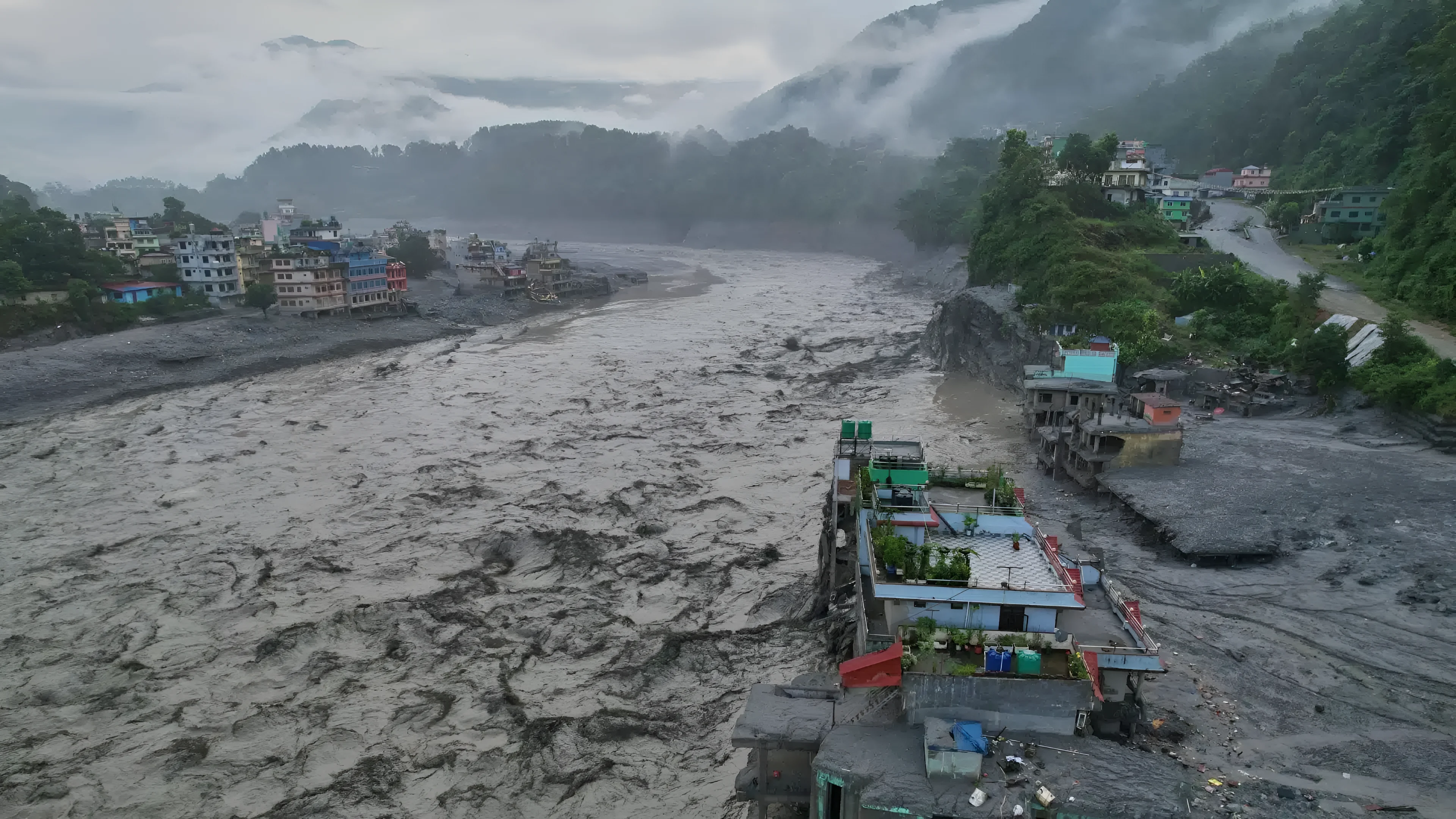 A drone view of the aftermath of flash flooding along the Trishuli River in Nuwakot, Nepal, highlighting the extreme hazards facing infrastructure in the Himalayan region. Photo: Rajesh Kumar Singh/AP Photo
These conditions have direct implications for hydropower. The same geography that makes Himalayan rivers attractive for electricity generation also produces some of the risks to the infrastructure built to harness them.
For hydropower developers, these risks eventually enter a balance sheet. The financial calculations behind a hydropower project stretch decades into the future. They include assumptions about river flows and extreme events, construction and maintenance costs, the lifespan of infrastructure and the electricity revenues it will generate. Banks lend against these expectations, investors assess the returns and insurers put a price on the possibility of damage.
Nepal’s recent experience suggests that infrastructure damage is already a repeated feature of the sector. Floods and landslides affected 26 hydropower projects in 2021, another 30 projects in 2023 and 26 facilities in 2024. The scale of the Rasuwa disaster has made the financial consequences unusually visible.
Commercial insurance losses from the disaster are expected to exceed 20 billion Nepali rupees, or US $130 million, before claims relating to deaths, injuries and workers’ compensation are included. Much of the exposure comes from damaged hydropower projects. Overall economic losses have been estimated at more than US $2.56 billion.
Those costs may also affect future projects. Nepali insurers pass much of their exposure from large hydropower projects to reinsurers, including international firms. Following the disaster, industry representatives have warned that reinsurers may tighten coverage, impose higher premiums and become more selective about the risks they are willing to cover. Hydropower could consequently become more expensive to insure even where no project has been damaged.
Who carries the risk?
In Nepal, this question reaches beyond governments, banks and large companies because ordinary citizens have also become investors in hydropower.
Chilime Hydropower, one of the projects affected in the August disaster, pioneered a model through which project-affected communities and the wider public could buy shares in hydropower companies. The model subsequently spread across the country, drawing households into the financial fortunes of the sector.
The Rasuwa disaster exposed the other side of that relationship. On 26 August, Nepal’s hydropower sub-index fell sharply, alongside insurance stocks, as investors assessed the damage. The sell-off subsequently extended beyond companies whose projects had been directly affected.
 Investors monitor share prices at a broker’s office in Kathmandu, reflecting the growing financial exposure to Nepal’s expanding hydropower sector. Photo: File/TKP
A disaster can therefore travel financially well beyond the damaged project. Losses can pass through developers, lenders, insurers and reinsurers, eventually reaching governments, electricity consumers and individual shareholders. How those risks are priced and distributed will become increasingly important as the sector grows.
Bhutan shows how governments are beginning to respond. Its 2025 National Energy Policy places greater emphasis on climate resilience, while revised hydropower planning and dam-safety guidelines incorporate catchment-wide risk and geohazard management. But the scale of planned development across the Himalayas means resilience cannot be confined to making individual projects safer. It also requires asking where projects are built, how risks accumulate across river basins and how those risks are reflected in the economics of hydropower.
For decades, Himalayan rivers have been described in terms of their enormous hydropower potential: the electricity that can be generated, investment mobilised and power traded across borders. But hydropower potential comes with risk, and somebody has to carry it.
As billions of dollars flow into Himalayan hydropower, governments, investors and insurers will have to decide how much mountain risk they are prepared to carry, what they are willing to pay for it and where the costs will fall if that risk materialises.