In September 2022, the first reports surfaced that North Korea was covertly supplying Russia with artillery shells for its invasion of Ukraine. At the time, Pyongyang's rejection was blunt. 'We have never exported weapons or ammunition to Russia before, and we will not plan to export them,' a defence ministry spokesperson said, telling Washington to 'keep its mouth shut'.
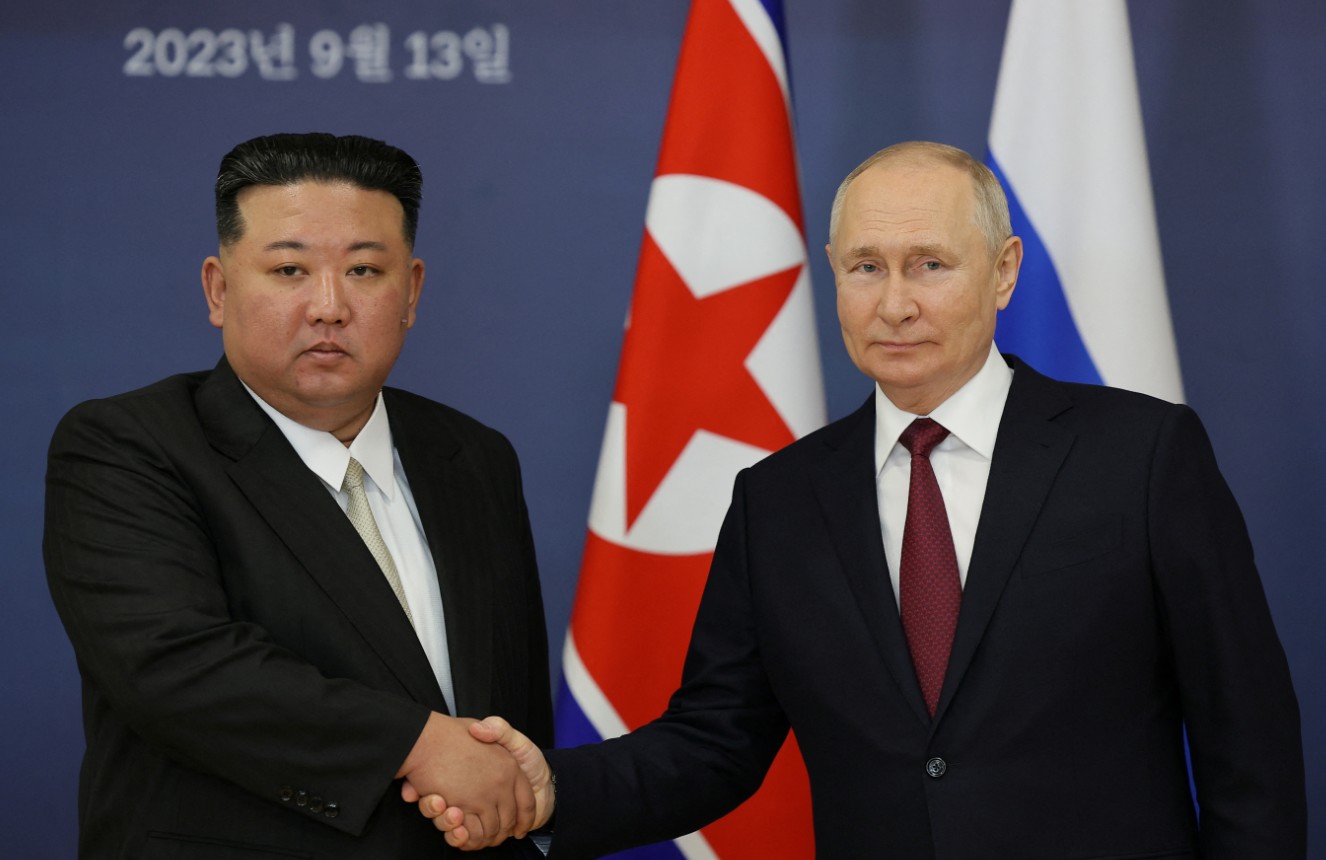
Kim Jong Un and Vladimir Putin meet at the Vostochny Cosmodrome in 2023, as North Korea’s military partnership with Russia began taking shape. Photo: Reuters
Today, little is left of this denial. On 9 September, at a ceremony marking the regime's 78th founding anniversary, Kim Jong Un paid 'special thanks and high tribute' to the commanding officers and soldiers of what state media now openly calls the DPRK's 'overseas military operations'.
But while North Korea is by now a full-fledged belligerent in Russia's war against Ukraine, Europe's response has been passive. Apart from the occasional condemnation, the DPRK appears to remain a faraway problem for many Western leaders – despite its military presence on Europe's doorstep. Meanwhile, North Korea's bet on aiding Russia is paying off handsomely, giving DPRK leader Kim Jong Un more confidence than ever before. So what can Western leaders and Ukraine do?
How did we get here?
The build-up to North Korea's military alliance with Russia didn't start with shells or soldiers, but with grain. By early 2023, Russian customs data started to show regular shipments of wheat flour moving into a North Korea that was still recovering from pandemic-era food shortages. At the time, the shipments of grain and horses did not garner much attention, but in hindsight, it was the start of an escalating cooperation between Moscow and Pyongyang that would result in the latter being its biggest military partner.
Then in summer that year, the first signs of military cooperation came up. On 27 July 2023 – Victory Day in North Korea's telling of the Korean War armistice – Kim personally walked Russian defence minister Sergei Shoigu through an arms exhibition in Pyongyang, showing off ICBMs and attack drones. Seven weeks later, Kim travelled to Russia's Far East himself, meeting Vladimir Putin at the Vostochny Cosmodrome on 13 September 2023, and pledging Pyongyang's 'full support' for Moscow's war.
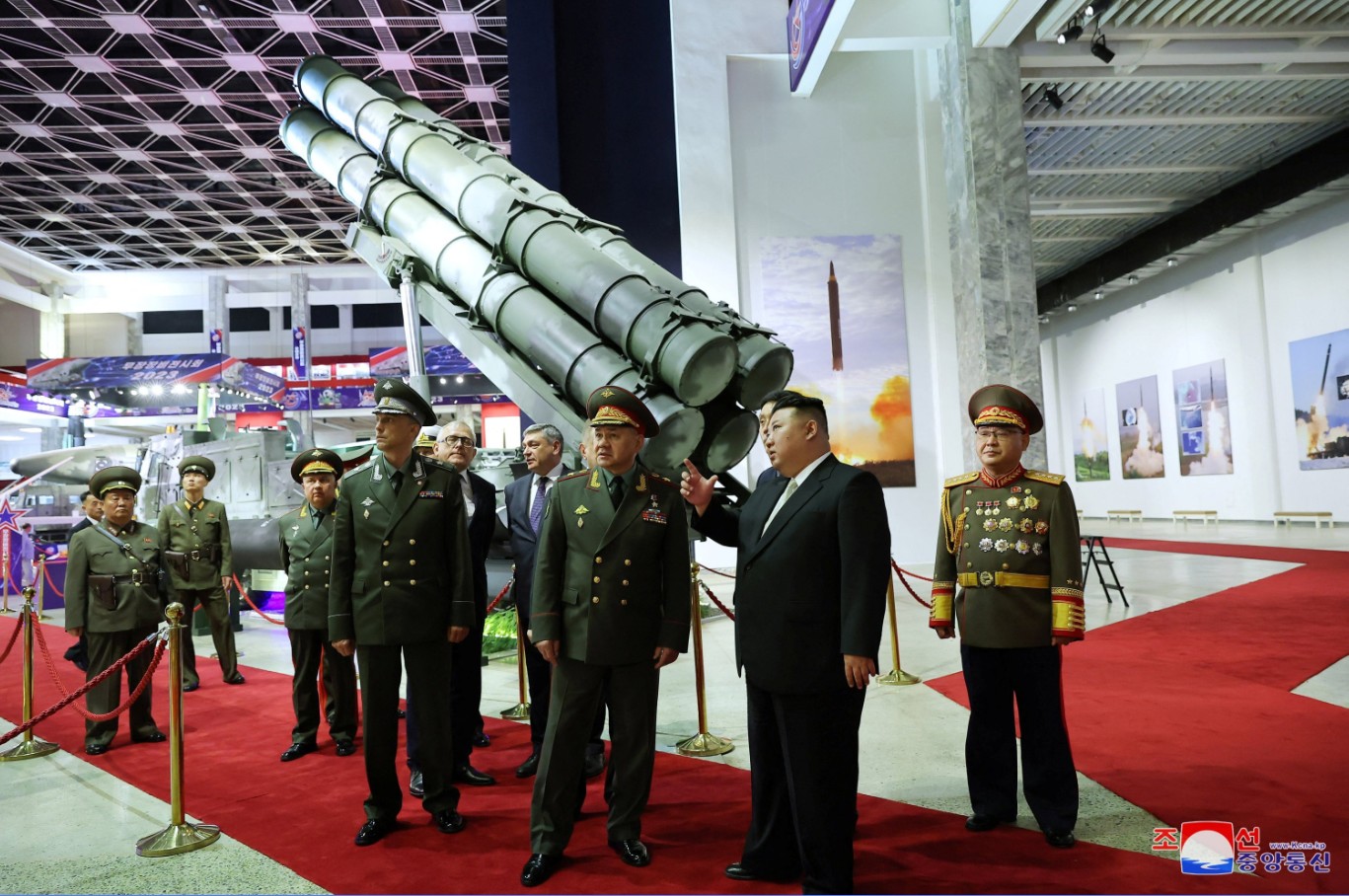 Kim Jong Un shows Russian defence minister Sergei Shoigu
North Korean weapons in Pyongyang in July 2023, signalling
growing military cooperation. Photo: KCNA
Kim Jong Un shows Russian defence minister Sergei Shoigu
North Korean weapons in Pyongyang in July 2023, signalling
growing military cooperation. Photo: KCNA
By October, the White House said North Korea had shipped more than 1,000 containers of military equipment and munitions to Russia by rail. Shells were followed by missiles. Ukrainian forensic teams identified the wreckage of a North Korean-made KN-23 ballistic missile after a strike on Kharkiv in January 2024 – the first confirmed battlefield use of North Korean missiles by Russia.
The relationship was formalised in June 2024 when Putin travelled to Pyongyang and signed a Comprehensive Strategic Partnership Treaty with a mutual-defence clause. Four months later, the last taboo fell: troops. By late October 2024, NATO Secretary General Mark Rutte confirmed that North Korean soldiers were fighting alongside Russian forces in Kursk.
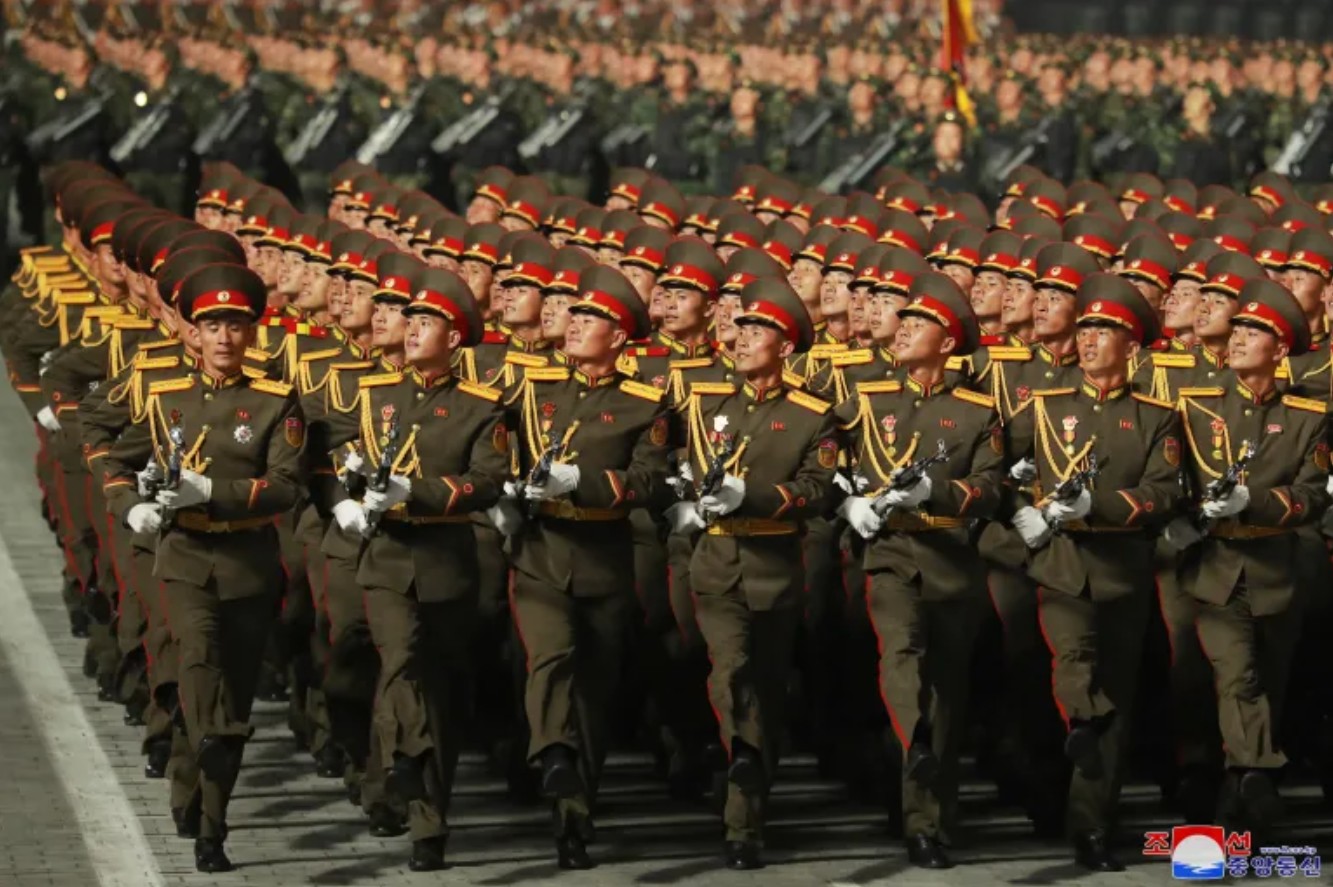 North Korean soldiers march during a military
ceremony, reflecting Pyongyang’s growing emphasis on
overseas military deployments. Photo: KCNA/Reuters
North Korean soldiers march during a military
ceremony, reflecting Pyongyang’s growing emphasis on
overseas military deployments. Photo: KCNA/Reuters
How did Brussels and Kyiv respond?
Europe did not stay silent, but it also didn't do much beyond talk. On 24 October 2024, the EU's High Representative issued a statement declaring the bloc 'deeply alarmed by reports that the DPRK is sending troops to participate in Russia's illegal war of aggression against Ukraine.' Then-foreign policy chief Josep Borrell and South Korean foreign minister Cho Tae-yul, in a joint statement, condemned the cooperation as a 'serious breach of international law, including the most fundamental principles of the UN Charter'.
Kyiv, unlike Brussels, didn't have the option of confining its response to statements. Ukraine's forces met North Korean troops head-on almost as soon as they arrived: on 22 January 2025, the 8th Regiment of Ukraine's Special Operations Forces said it had killed 21 and wounded 40 North Korean soldiers in an eight-hour battle in Kursk Oblast, fighting off an assault with small arms. Ukraine took the controversial decision to parade two North Korean prisoners of war before the international press – two young men, caught in battle, who appeared heavily indoctrinated by the DPRK regime.
In August 2026, Ukraine president Volodymyr Zelensky said 30,000 to 50,000 additional North Korean troops were being readied for Russia. Kim Yo Jong, Kim Jong Un's sister, dismissed it ten days later in a KCNA press statement as 'an ungrounded farce of Kiev,' and – as ever – insisted 'the US and the West are entirely responsible for the start of the Ukrainian crisis and its prolongation.'
What can Ukraine and Europe do?
The uncomfortable truth is that none of the options available to Kyiv and its allies would meaningfully change Pyongyang's calculus, unless the partners are willing to take large risks.
Ukraine has also had successes with small special operations, such as water drones that blew up the Crimea bridge. It could try to do the same with the new Russia-North Korea bridge — the two countries held a completion ceremony for their first-ever road crossing, over the Tumen River, on 7 September, which experts believe could be used for arms shipments. But Daniel Pinkston, a conflict expert and professor at Troy University in Seoul, told Democracy Asia that the sheer geographical distance from Ukraine to North Korea would make such actions difficult, unless carried out through some form of hybrid warfare – and even then, the risks of bringing the fight to a nuclear-armed dictatorship have not been mapped. As for Ukraine’s allies in Europe, Pinkston said they could exhaust options like ‘expelling North Korean diplomats, closing down embassies or severing diplomatic ties’. Cyberattacks and malware are also options, he said, especially if ‘aimed to disrupt DPRK supply chains’.
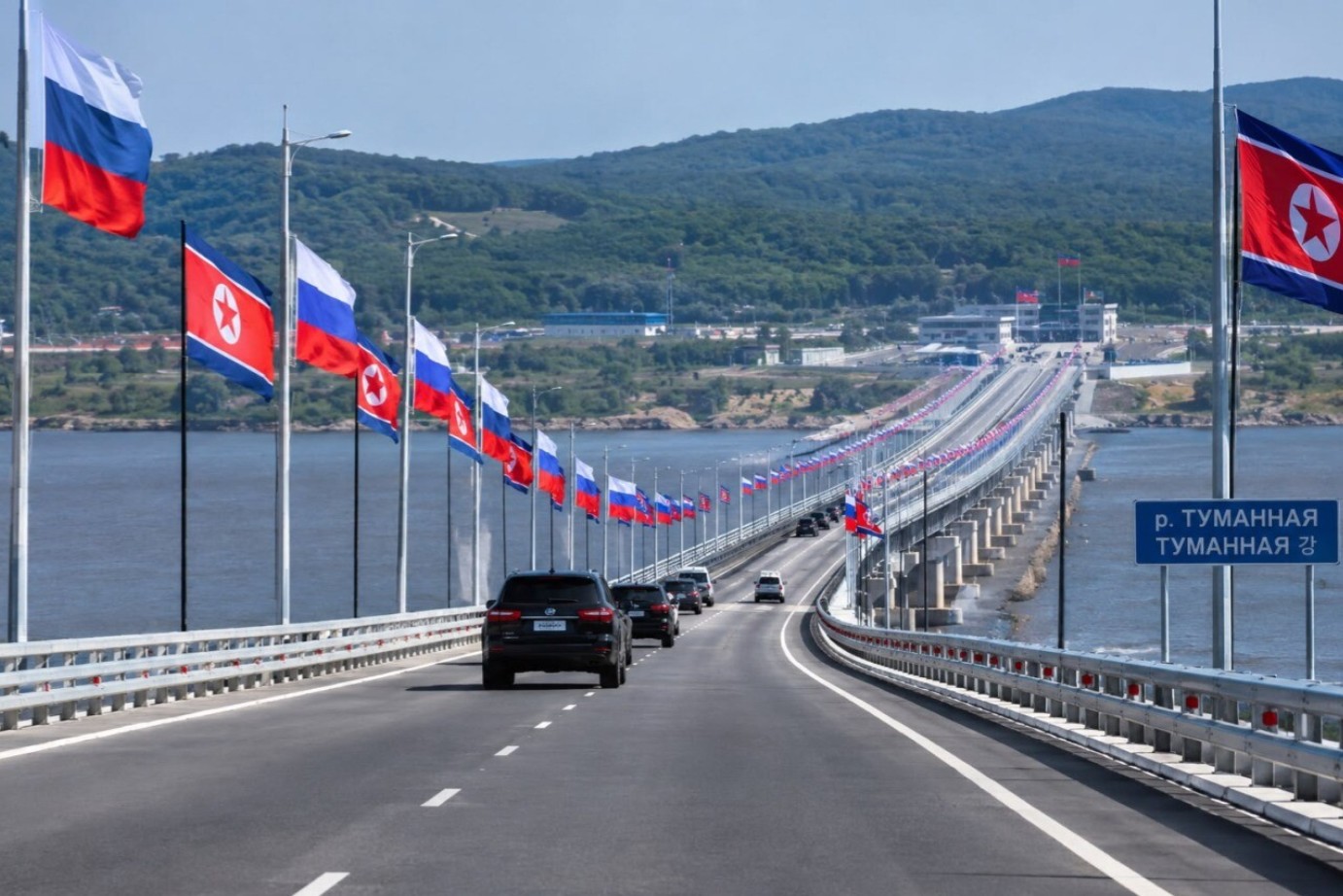 A new road bridge links North Korea’s Rason region with
Russia’s Khasan, reflecting the countries’ expanding
economic and logistical ties. Photo: Armenpress
A new road bridge links North Korea’s Rason region with
Russia’s Khasan, reflecting the countries’ expanding
economic and logistical ties. Photo: Armenpress
Scholars Eul-Chul Lim and Jong Eun Lee have argued that sending troops abroad is not a cost-free move for Kim but rather a genuine vulnerability. 'The overseas deployment of troops and workers creates a risk of military casualties and exposure to outside information,' they wrote, information that could 'challenge the state's ideological propaganda and encourage questions and dissent among the citizens.'
Or Ukraine and its allies could simply wait and hope that the North Korean threat will disappear with a Russian defeat or a negotiated peace. However, even in such a scenario, the close cooperation between Moscow and Pyongyang that has been cemented during these war years appears likely to be here to stay, regardless of how the war ends.
Peter Ward, an expert on the North Korean economy at the Sejong Institute in Seoul, argued that at least part of the relationship would survive whatever happens to the war. 'Russia is unlikely to just be reintegrated into the international community and suddenly become a big fan of the sanctions that target the North Korean economy,' Ward said.
Whatever happens to Russia, North Korea keeps reaping the fruits. As one Korea-watcher put it as the alliance was taking shape: 'The game has fundamentally changed. It may be that the only winner of the Russia-Ukraine War is North Korea.'