An outbreak of violence on the streets of Jakarta in August raised fears of the kind of social unrest witnessed last year, the worst riots the capital had witnessed since 1998 when the dictator Suharto fell. Joseph Rachman reports on fears of a repeat.
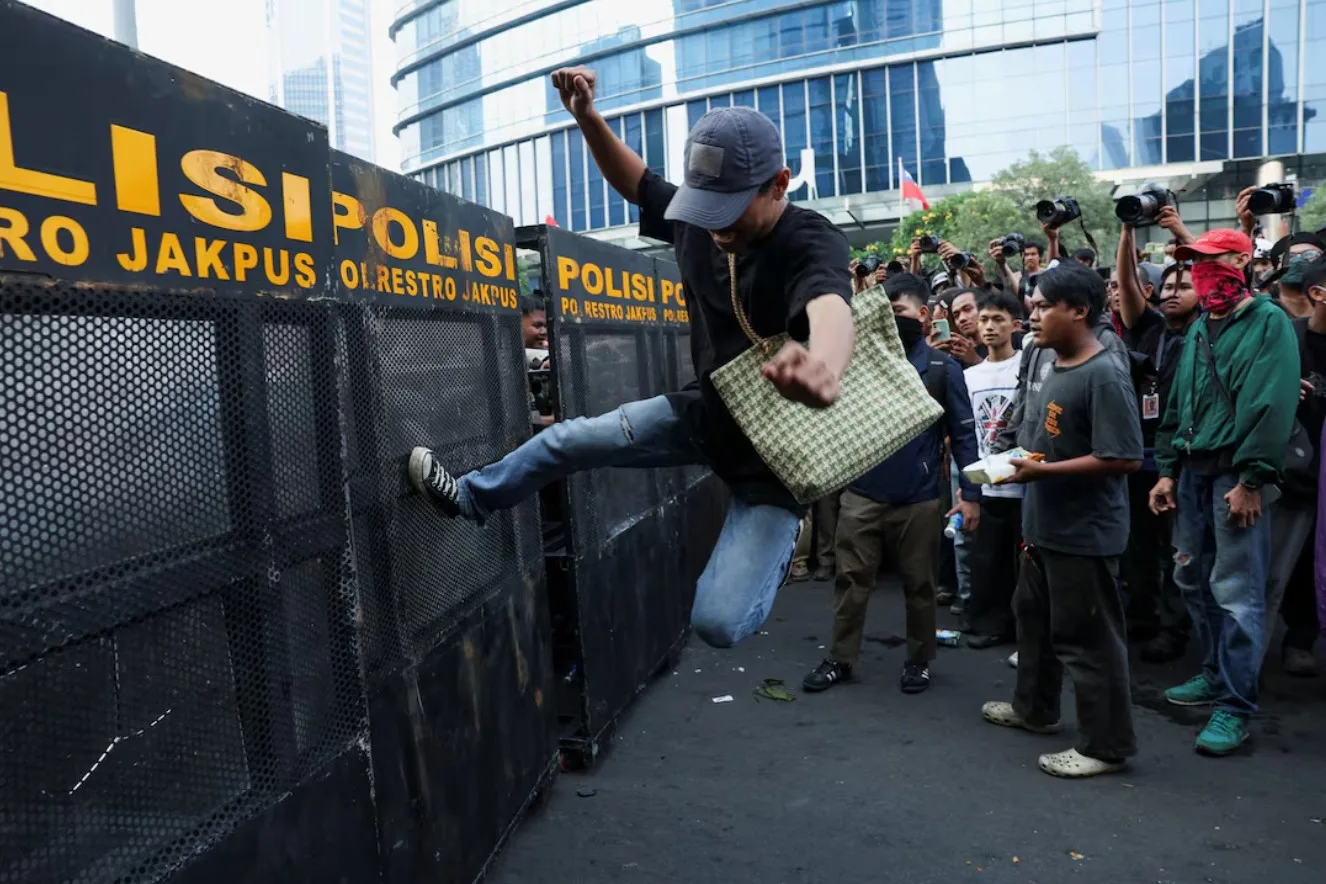
A protester kicks a police barricade during a demonstration in Jakarta amid growing public concerns over government policies. Photo: Reuters
It was a scene Indonesia has not seen in a while: government-linked thugs beating up protesters on the streets of Jakarta. On 27 August demonstrators had been outside the parliament all day, some burning trash and trying to break into the parliament area. At dusk police began to disperse them with tear gas and water cannons. As they moved to West Jakarta trucks full of men in white headbands and armed with bamboo sticks arrived and began to assault people. A local vendor died while closing his shop. Reports linked the men to the group GRIB Jaya, an organisation which straddles the line between gangsterism and politics with alleged links to President Prabowo Subianto. Its leader, Rosario de Marcal aka Hercules, had been recruited to serve in local militias during Indonesia's bloody occupation of Timor Leste. recruited as a logistics porter for the Indonesian army. He subsequently pledged loyalty to Prabowo, a former special forces officer there, for saving his life. A close Prabowo aide described him as an ‘old friend’. GRIB Jaya has denied responsibility for the violence but admitted it was in the area saying it was working to help maintain order. Use of such groups to crack down on dissenters is an old tactic in Indonesian politics. The street violence led to a pall of nervousness about potential for a repeat of last year's protests.
The protests last year followed the death of a delivery driver run over by an armoured police vehicle. The backdrop was a combustible mix of young people whose aspirations have been raised by education and social media, but who have struggled to find the good jobs and good life they want. The various forces that took to the streets last year – delivery drivers, university students, and even Jakarta teenagers looking for entertainment with an edge – represented a cross-section of Indonesia’s restless youth.
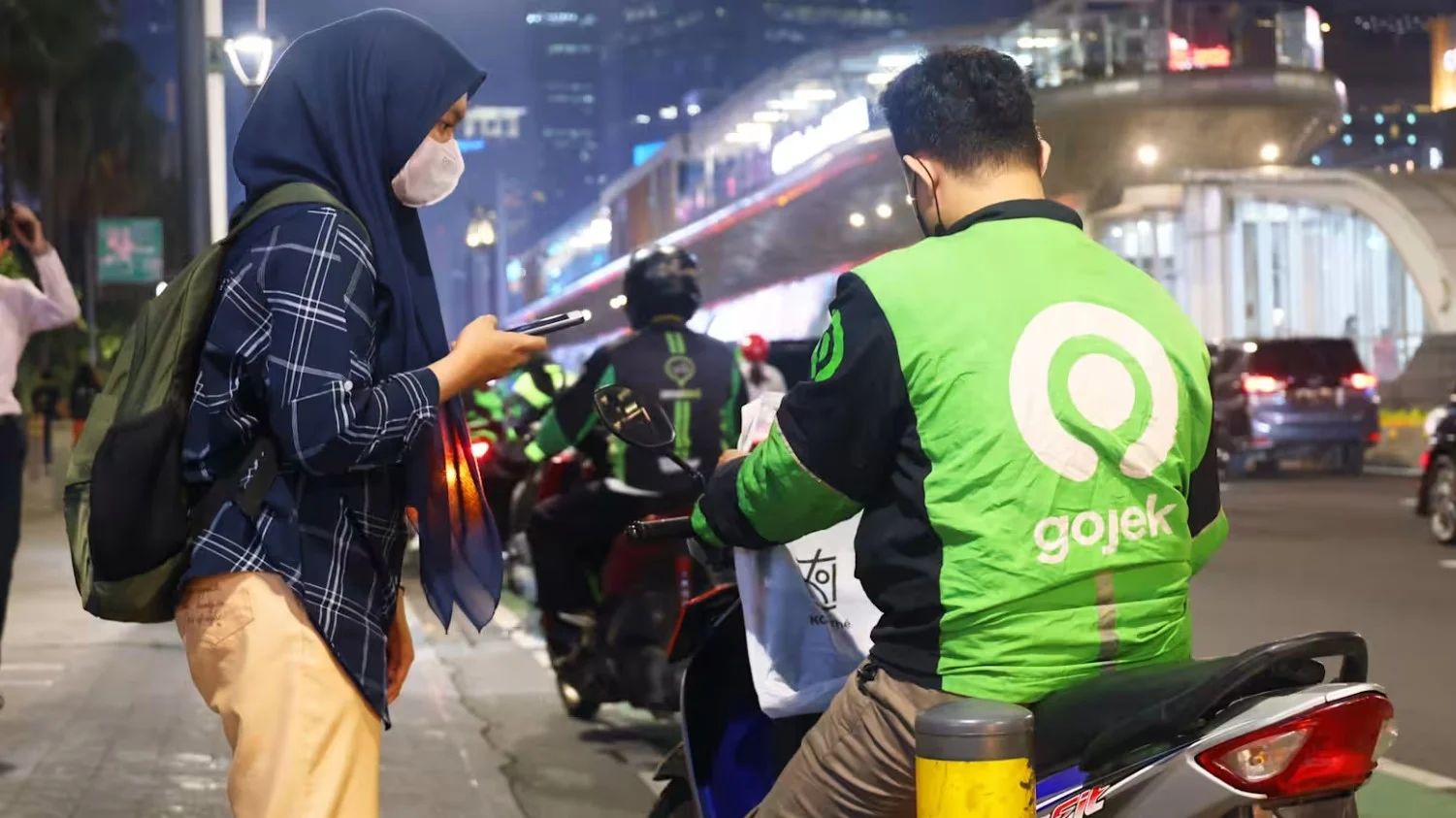 Indonesian students rally in Jakarta amid growing concerns
over political freedoms and economic pressures. Photo:
Reuters
Indonesian students rally in Jakarta amid growing concerns
over political freedoms and economic pressures. Photo:
Reuters
A year on, Indonesia faces many of the same problems. The basic challenge is that strong headline growth and employment figures are not translating into opportunities for ordinary Indonesians. Nearly half of all jobs generated in 2025 were informal. World Bank data shows key drivers of inflation have been food and fuel prices, the most politically sensitive items. And, while rates may have come down, consumers are still suffering from sticker shock. Another important factor is that social media allows ordinary people a constant glimpse of luxurious lives beyond their reach. The existence of Facebook groups where lower middle class Indonesians post AI generated images of themselves wearing luxury clothes as they enjoy the delights of fine dining in Paris or a sports car in Shanghai are a glimpse into a world of frustrated dreams.
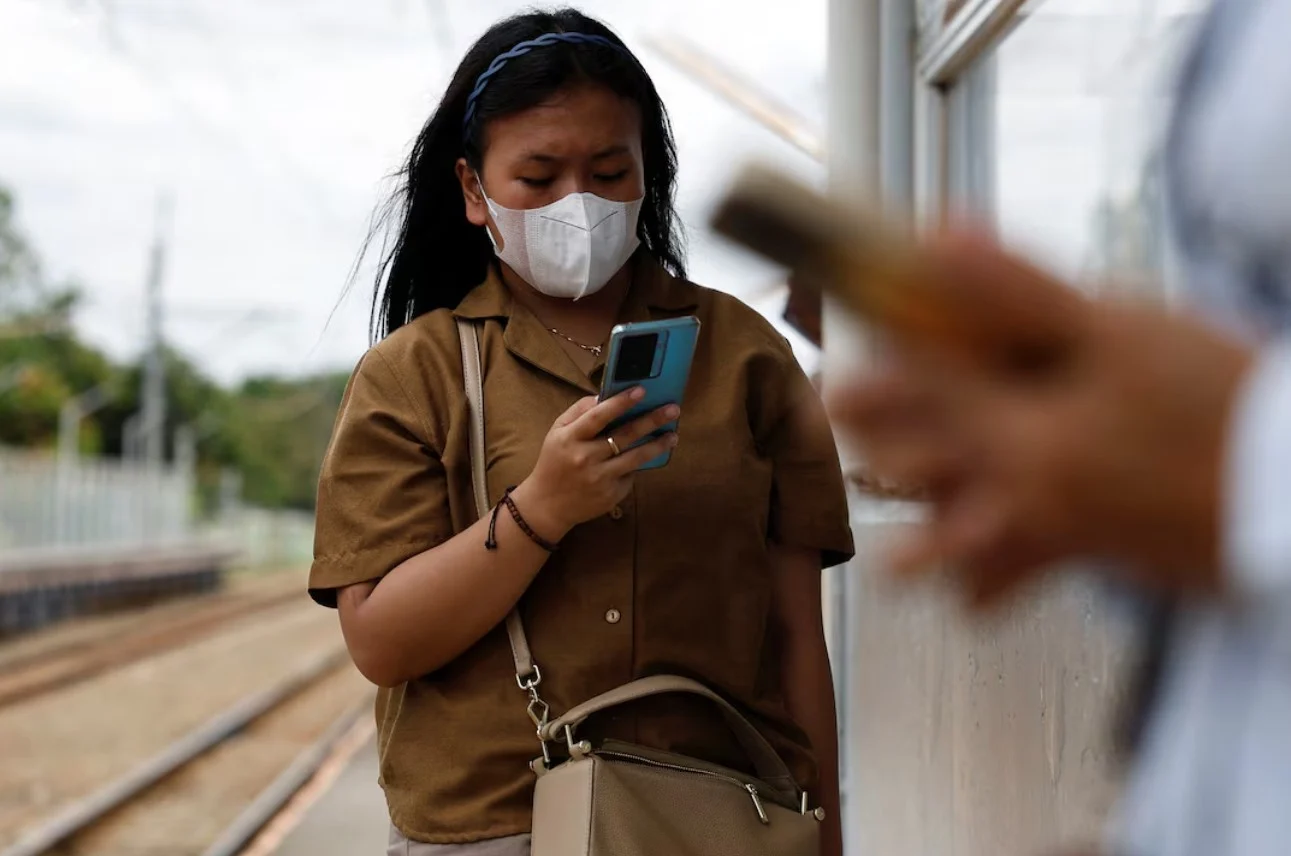 Indonesia’s young people are increasingly exposed
through social media to lifestyles and opportunities
that can feel beyond their reach. Photo: Reuters
Indonesia’s young people are increasingly exposed
through social media to lifestyles and opportunities
that can feel beyond their reach. Photo: Reuters
The question of ‘Why them and not me?’ poses itself sharply and combines explosively with a bitter awareness that political elites’ wealth is built on corruption. The ‘Cabinet Couture’ Instagram account, which prices the outfits of Indonesian politicians and their children stitch by stich stitch and jewel by jewel, and its repeated blocking in Indonesia at the order of the government, shows just how sensitive the issue is.
The government has tried to contain these pressures. It was the participation of app delivery drivers, a millions strong labour cohort who communicate in dense networks of group chats, that turbo-charged last year’s protests. Since then the government has gone out of its way to favour these drivers with measures like sharply reducing the cut delivery apps take of orders placed on them.
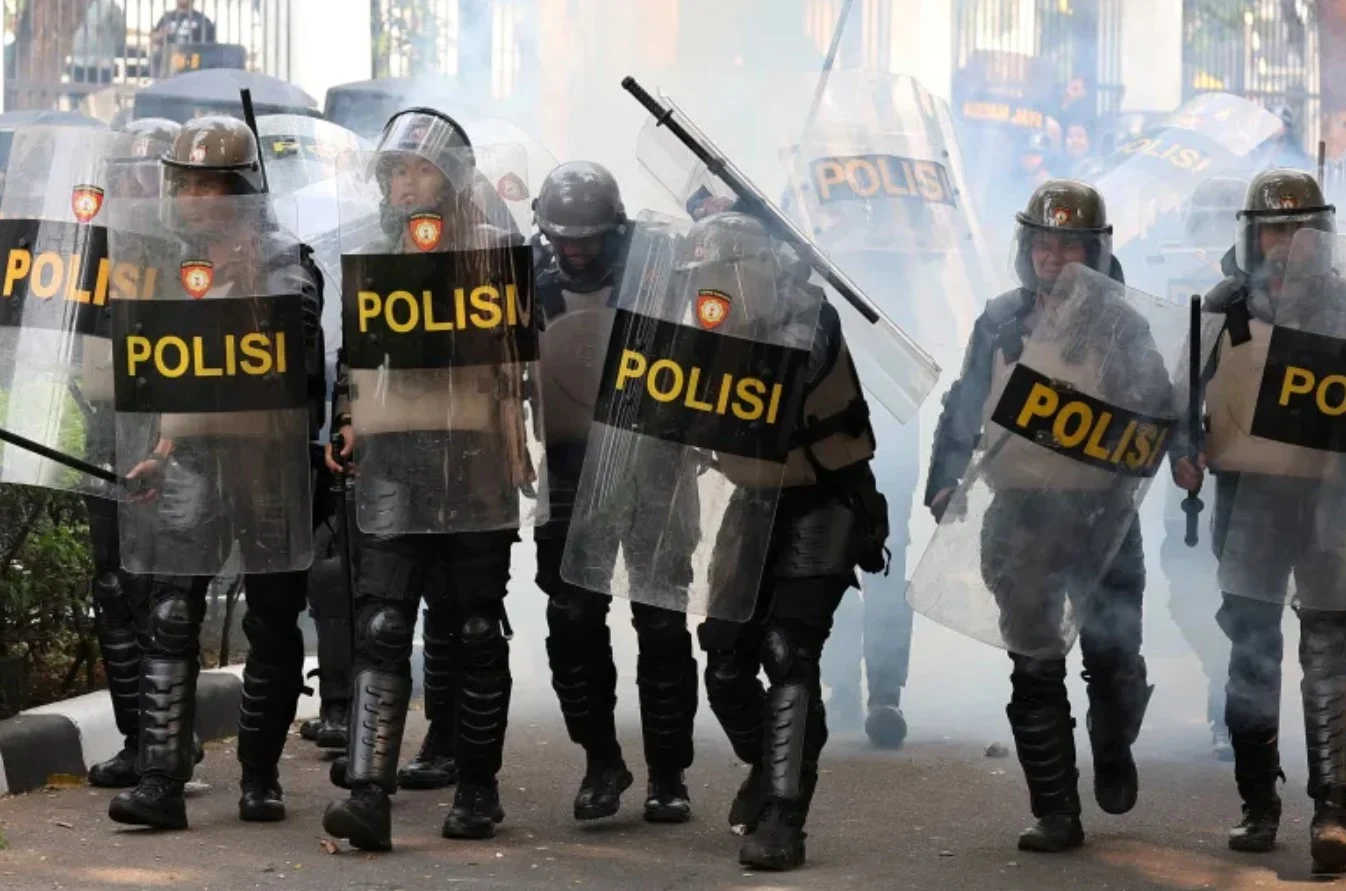 Police confront protesters during demonstrations in Jakarta,
highlighting the government’s challenge of managing
growing public discontent. Photo: Willy Kurniawan/Reuters
Police confront protesters during demonstrations in Jakarta,
highlighting the government’s challenge of managing
growing public discontent. Photo: Willy Kurniawan/Reuters
In the last resort it can also count on force. The government decided against martial law last year. But, lower intensity options could prove effective like the presence of pro-government thugs who skirmished with protestors at a recent demonstration.
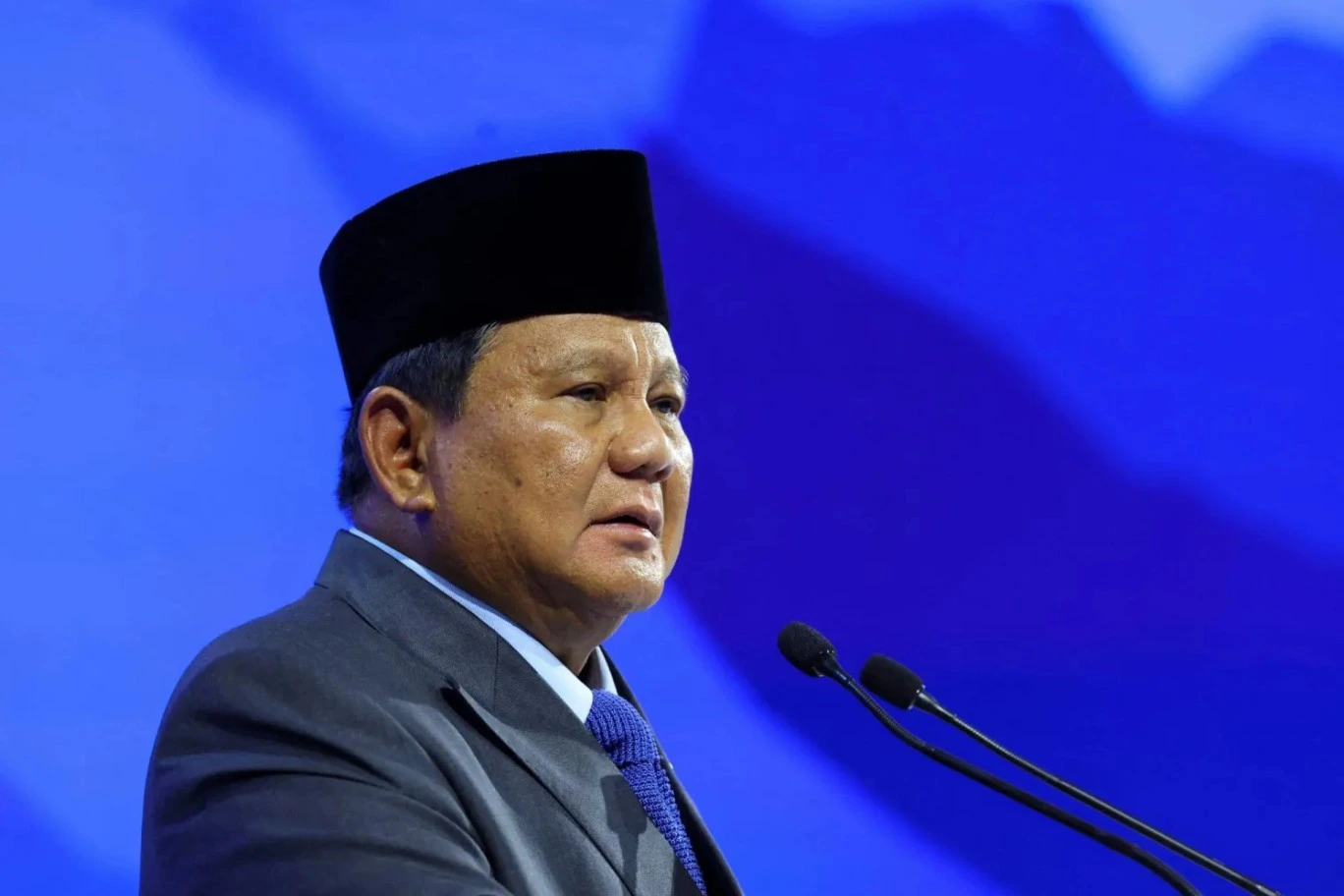
The ambient discontent has rapidly eroded President Prabowo Subianto’s popularity. His approval rating is in free fall standing at 37 per cent in August, compared to 75 per cent last December, according to a poll released in August by Tempo Data Science.
This discontent will empower opportunistic new politicians able to position themselves as outsiders, but probably not shift Indonesia’s wider political and economic setup. Indonesia’s democratic system has proved relatively flexible at absorbing outsiders. And, a minimum level of social welfare provided via subsidised fuel and food takes the edge off the social desperation poverty can cause.
Political rivals are starting to position themselves. Former President Joko Widodo, a ‘polite populist,’ as one political scientist called him, is on manoeuvres. After his tacit endorsement propelled Prabowo to the presidency he was then sidelined and is now looking for a way back in, likely via his son the vice-president.
Meanwhile, West Java Governor ‘Kang’ Dedi Mulyadi now polls as the most popular presidential candidate, propelled by his mastery of video-based social media as a tool for constant self-promotion. But, if a new president takes power in 2029 how much would this solve?
Any government will struggle with structurally difficult circumstances. On the jobs front reversing the slide towards low productivity informal work will be hard. For decades export oriented manufacturing has been the path for countries to grow while absorbing workers into higher-paying and higher-productivity jobs. Indonesia was once at the forefront of this trend, but it deindustrialised too early, relying more on commodity exports instead. The economy that has evolved rewards profiting from natural resources over building industries.
Even if Indonesia manages to build a political economy more oriented towards productivity, increasing growth (a massive task in itself), the export-oriented model is under pressure. The global economic order is disintegrating under the intertwined pressures of America’s sweeping tariffs and the relentless ramp up of China’s export machine.
Public mood towards a popular politician can sour quickly. Prabowo’s 2024 presidential campaign was defined by a strong social media presence driven by cheery images of Prabowo dancing and cuddling his cats. When he reached power positive vibes only went so far.
Indonesia’s government has made challenging circumstances worse with dubious and capricious policymaking. The breakneck growth of nearby Vietnam shows that with effective government some middle-income countries can actually navigate trade wars and technological change to their advantage.
To move onto a path resembling Vietnam’s Indonesia would need wrenching reforms that take on deeply entrenched incumbent interests across the social scale – from oligarchs and bureaucrats to farmers and labour unions. While the current government has trod hard on the toes of many elites this has mainly been in service of aggrandising presidential power without a productive program.
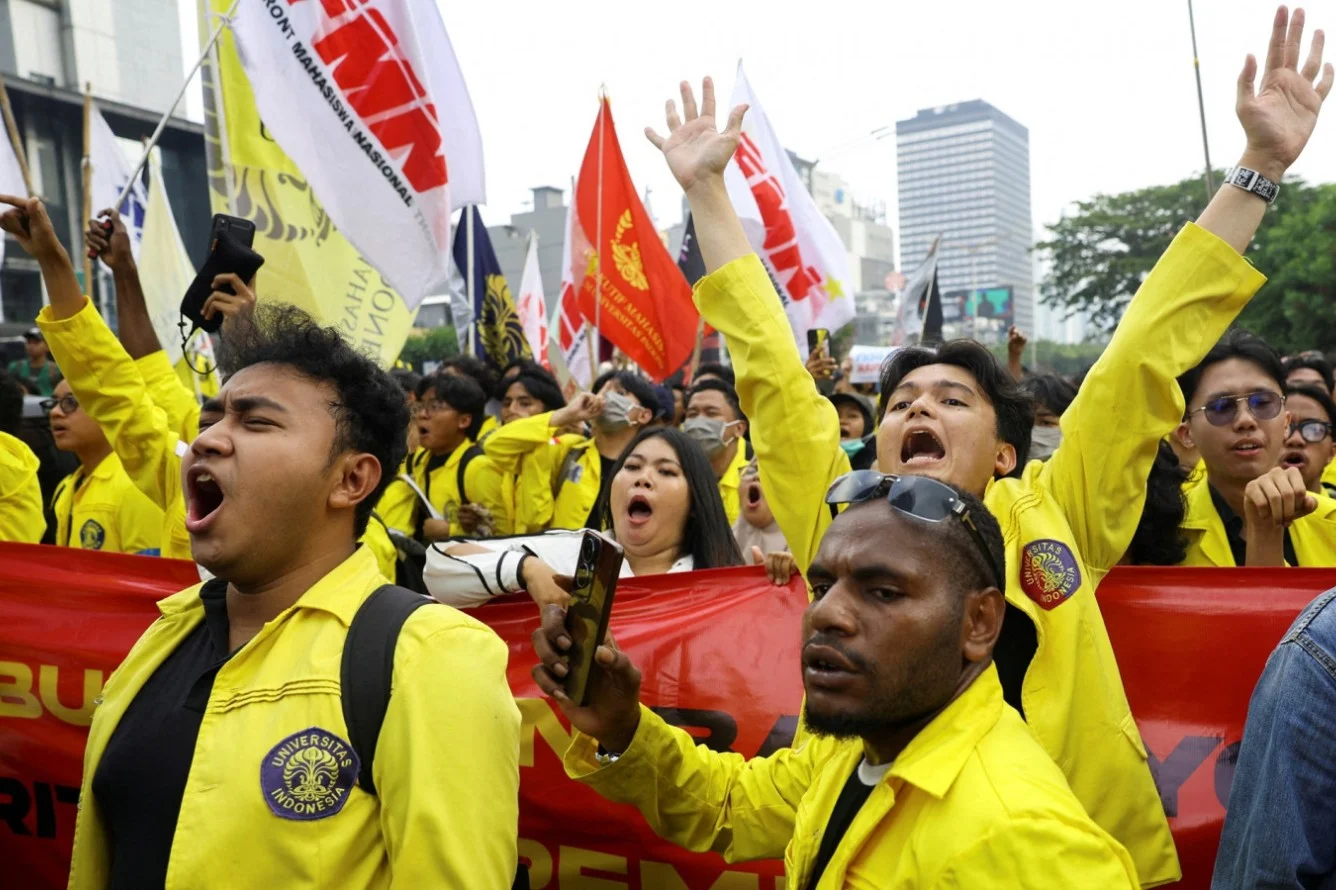 Young Indonesians take part in a protest in Jakarta,
highlighting both the aspirations and challenges associated
with the country’s large young population. Photo: Reuters
Young Indonesians take part in a protest in Jakarta,
highlighting both the aspirations and challenges associated
with the country’s large young population. Photo: Reuters
Its a sad situation as Indonesia needs to grow and has little time to waste. In a couple of decades Indonesia’s youth bulge will recede. That may mean less turbulent politics; the old are less likely to demonstrate. But, a greyer population will also need more government support. Unless the country has grown rich by then that economic challenge will be harder to solve than the current one.