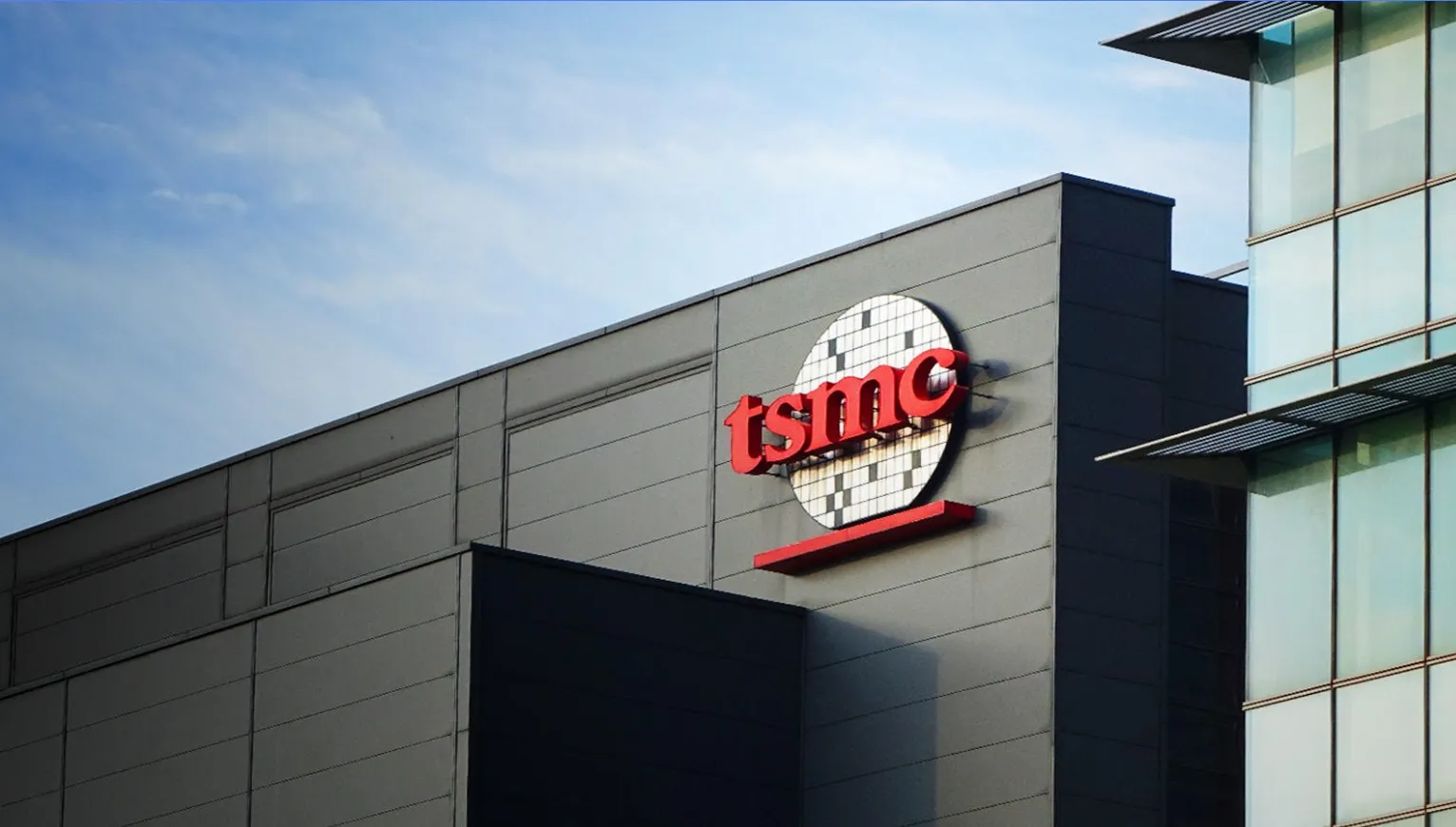
Taiwan Semiconductor Manufacturing Company, which dominates production of the world’s most advanced chips, reported May revenue up nearly 30 percent year on year after debuting its advanced A13 process technology earlier this year.

Taiwan Semiconductor Manufacturing Company (TSMC), the world's leading producer of advanced chips, reported strong revenue growth as demand for AI and semiconductor infrastructure continued to drive investment across Asia.
Semiconductors
Taiwan Semiconductor Manufacturing Company, which dominates production of the world’s most advanced chips, reported May revenue up nearly 30 percent year on year after debuting its advanced A13 process technology earlier this year.
After the volatility caused by the war in West Asia, Asian markets have been recovering strongly in the tech and semiconductor sectors. Stocks in Japan’s Nikkei and South Korea’s Kospi bounced back, partly as hopes rose of a deal between the United States and Iran over their armed conflict. Chipmakers like South Korea’s Samsung were leading the comeback. The country’s stock market is approaching developed-market status according to MSCI (Morgan Stanley Capital International).
To add to the buoyancy, chipmaker ChangXin Memory Technologies of China received regulatory approval for a US$4.2 billion initial public offering (IPO). This reflected wider international excitement over AI infrastructure.
Japan
Japan plans to send a delegation to Greenland this summer to study the possibility of mining rare earths and other critical minerals, as it seeks to reduce reliance on China. US President Donald Trump had previously threatened to annex the vast Arctic island. So, Tokyo’s move, announced on the eve of the G7 summit in Évian-les-Bains, France, was unlikely to please Trump.
 Rare-earth minerals have become strategically important as countries seek secure supplies for advanced manufacturing, clean energy technologies and defence industries. Photo: Resources Review
On a positive note, Takaichi advanced discussions with British Prime Minister Keir Starmer, on their countries’ plan to sign an £18 billion UK-Japan climate-related investment deal as warnings grew that a strong El Niño could disrupt weather patterns and test the UK’s climate preparedness. They also talked about how to finance the proposed Anglo-Japanese joint venture to manufacture combat aircraft.
Strait of Hormuz impact
Insurance Asia quoted Oliver Miloschewsky, head of shipping for Asia at Aon Plc, as saying, ‘What has shifted is not demand itself, but how risk is priced, managed and operationalised in delivering that demand.’ This was in reference to insurance cover for voyages through the Strait of Hormuz. This suggests, notwithstanding a ceasefire, that insurers remain cautious and high insurance costs may continue.
 Commercial shipping passing through the Strait of Hormuz, a vital energy corridor where geopolitical tensions continue to influence insurance costs, trade flows and energy security. Photo: Reuters
Asian currencies continued to face an onslaught because of foreign investors preferring to lock in profits from historically high returns from Asian equity and repatriate funds. Lipper Alpha Insight reported that ‘rising risk aversion has triggered significant foreign selling’. The publication said foreign ownership of Indian equities was ‘the lowest in nearly 15 years’. Nearly US$20 billion has been withdrawn in the first half of 2026 from India. Amid the turmoil, the US has become India’s top gas supplier after a force majeure freeze in exports from Qatar.
China
‘China is innovative. Its economy is a mess. Which matters more?’ The Economist asked, calling that ‘A question that will define the 21st century’. This is a moot point, since China is the world’s second biggest economy, Asia’s largest and a major engine for Asian growth and prosperity.
If Trump leaves the US economy in tatters a sensible successor will likely start undoing the damage and the US will definitely rebound. If China, despite totalitarian stability, is struggling economically, then Asia – indeed the world – will need other props.
‘Since 2021 Chinese president Xi Jinping has steered China’s economy away from a preoccupation with property (building it, selling it and finishing it) towards high-tech manufacturing and ‘new productive forces’, as the paramount leader calls them. ‘But are the new forces big enough to fill the gap left by the old?,’ The Economist asked, answering ‘Probably not big enough to offset the drag from the old.’

India
In 2010, when Manmohan Singh was India’s prime minister and India was still widely discussed as a rising economic power, TIME magazine carried a debate on India and China’s economic prospects. The cover said, ‘INDIA vs CHINA’, and posed the question: ‘Which Economy Will Rule The World?’ and pictured an elephant (representing India) and a dragon (signifying China) locked in a tussle. Within the magazine, some experts bet on India surpassing China this century.
Today, such a suggestion would be treated as a joke. However, resolution of the rivalry between these two economic powers could lie in the potency of the combined strength of Asia’s ‘tiger’ economies, Hong Kong, Singapore, South Korea, and Taiwan.
East Asia
South Korea’s president, Lee Jae Myung, appears to have steadied his nation from the turbulence caused by his predecessor, Yoon Suk Yeol, who declared martial law in 2024 before being impeached last year. Referring to the upheaval in an interview with The Economist, Mr Lee declared that his country could ‘move beyond this normalisation of the abnormal’. The magazine warned that ‘challenges loom’.
Japan’s JERA signed a 20-year liquefied natural gas supply deal with Malaysia’s Petronas. The shock of shutdowns in supplies from the Gulf prompted Japan to diversify its purchases. Malaysia was seen as a trustworthy ally. Analysts said Kuala Lumpur is leveraging its natural resources to rise as a ‘middle power’.
 Central Asia is attracting growing international interest as investors look to the region's mineral resources, transport links and expanding role in global supply chains.
Central Asia
Bucking adversity elsewhere, Central Asian economies promise a strong 5.2 per cent growth projection. The Times of Central Asia reported that US investors are showing interest in Kazakhstan’s critical mineral riches, focusing on both extraction and processing. The paper also reported that Kyrgyzstan and Georgia are exploring ways to connect their transport plans to the China-Kyrgyzstan-Uzbekistan railway, with Bishkek seeking access to Georgia’s Black Sea ports.